Phoebe is a saint of the Catholic Church. Phoebe's feast day is celebrated on 3 September. Phoebe is the patron saint of deaconesses.
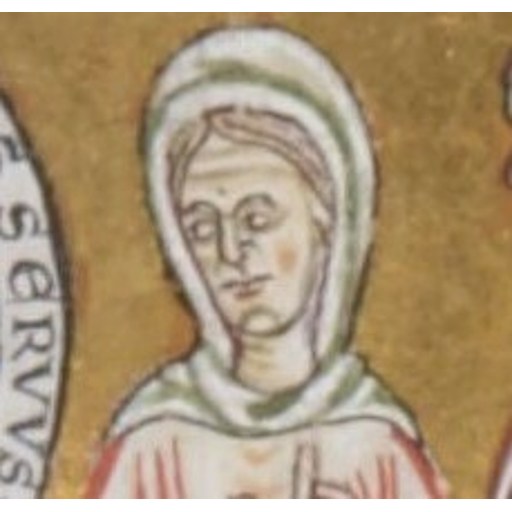
Unknown authorUnknown author
License: CC BY 4.0
Phoebe
Saint- Feast Day
- 3 September
- Gender
- female
- Church
- Catholic
Places
Roles & Family
Patronage
deaconesses
Biography
Phoebe (also spelled Phebe in some older English Bibles) is a first-century Christian woman known from a brief commendation in the New Testament. She appears in the Apostle Paul's Epistle to the Romans 16:1–2, where he writes that he commends "our sister Phoebe, a deacon of the church at Cenchreae," asks the Roman Christians to welcome her "in the Lord as is fitting for the saints" and to help her in whatever she may need, and adds that she has been a benefactor of many, including Paul himself. The letter is generally placed by scholars in the mid-first century, often around the mid-to-late 50s CE, when Paul was in the Corinthian region at the close of what is commonly called his third missionary journey. Cenchreae (Kenchreai) was the eastern port of Corinth in the Roman province of Achaia, on the Saronic Gulf; the church there was a satellite community of the larger Corinthian congregation.
The Greek word Paul uses of Phoebe, diakonos, is the same term applied elsewhere in the Pauline letters to male ministers and, in other New Testament writings, to Christ. Interpreters have long debated whether it here means a general servant of the community or the holder of a recognized office of deacon; either reading places her among the earliest named women in Christian ministry. Paul also calls her a prostatis, a word that in contemporary Greek could denote a patron, protector, or benefactor. The title suggests that she was a woman of some independent means who offered material support and perhaps social or legal protection to traveling missionaries and local believers. Because Paul asks the Roman church to receive her and assist her in her affairs, many ancient and modern commentators have concluded that Phoebe herself carried the Epistle to the Romans from the Corinthian area to Rome, making her one of the earliest known couriers of a Pauline letter and a figure of considerable trust in the apostolic circle.
No other contemporary source names her. Nothing reliable is recorded of her parentage, birthplace, marriage, children, or death. Later Christian tradition, drawing on the Romans passage, identified her as the first woman deacon and as a saint of the undivided Church. She is entered in the Roman Martyrology on 3 September and is commemorated on the same date in the liturgical calendars of the Eastern Orthodox Church. Some Western Protestant calendars remember her together with Lydia of Thyatira and Dorcas (Tabitha): the Episcopal Church and the Evangelical Lutheran Church in America on 27 January, and the Lutheran Church–Missouri Synod on 25 October. She is popularly invoked as a patron of deaconesses. Formal papal canonization in the later medieval or modern sense does not apply; her cult rests on scriptural mention and early ecclesiastical recognition.
Phoebe's historical importance lies less in a recoverable biography than in the glimpse she affords of women's leadership, patronage, and missionary travel in the urban churches of the Greco-Roman East. The combination of diaconal language, the title of patron, and the practical role of letter-bearer has made her a central figure in modern discussion of ministry and gender in earliest Christianity, even while the documentary record remains limited to those two verses of Romans.