Ponce de Faucigny is a blessed of the Catholic Church (d. 1178). Ponce de Faucigny's feast day is celebrated on 26 November.
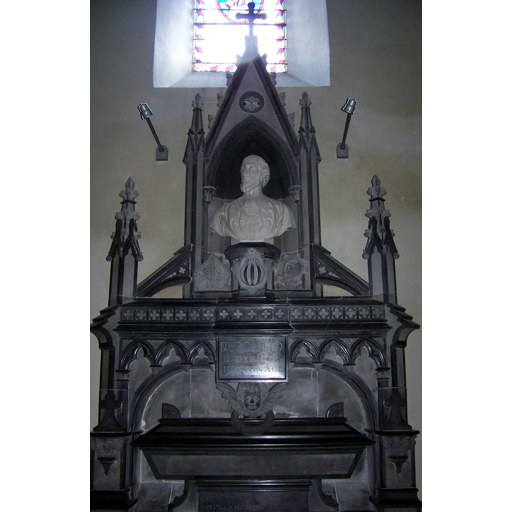
Alainauzas
License: CC BY-SA 3.0
Ponce de Faucigny
Blessed- Life Span
- d. 1178
- Feast Day
- 26 November
- Gender
- male
- Church
- Catholic
Places
Roles & Family
Religious Information
Biography
Ponce de Faucigny belonged to the noble house that ruled the lordship of Faucigny in the western Alps during the High Middle Ages. The territory of Faucigny, centered on the ancestral castle of the same name, lay in what is now the French department of Haute-Savoie, then part of the Kingdom of Arles within the Holy Roman Empire and closely tied to the neighboring County of Geneva and the rising House of Savoy. Born at the castle of Faucigny in the early twelfth century, Ponce entered the Church and became a canon of the cathedral chapter of Saint-Pierre in Geneva. Like many cathedral canons of the period who were drawn to the movement for clerical reform, he sought a more regular and austere common life than that customarily led by secular canons.
With the patronage of his kinsmen among the lords of Faucigny, Ponce established a community of canons regular at Sixt, in the upper valley of the Giffre. The house followed the Rule of Saint Augustine and was raised to the status of an abbey, of which Ponce became the first abbot. The Abbey of Sixt served both as a monastic center and as a base for pastoral work in the surrounding Alpine valleys. Donations of land and rights from the Faucigny family and other local nobles endowed the community and linked it closely to the regional aristocracy. Ponce’s foundation formed part of the wider expansion of Augustinian canons in the twelfth century, an order that appealed to clerics who wished to combine liturgical observance, communal poverty, and active ministry.
Ponce remained abbot of Sixt until his death on 26 November 1178. He was buried at the abbey, and a local cult developed around his memory. In later centuries he was venerated as blessed, and his feast came to be observed on 26 November, especially in the churches of Savoy and Geneva. The abbey continued as a house of Augustinian canons until it was suppressed during the French Revolution; the church and some conventual buildings survive. Surviving evidence for Ponce’s life consists mainly of later cartularies, obituaries, and liturgical commemorations rather than contemporary biographies, so many details of his career remain uncertain. He is nonetheless remembered as the founder of one of the principal regular-canonical houses of the northern French Alps.
The political and ecclesiastical setting of his life was the twelfth-century reform of the Church and the consolidation of Alpine lordships. The lords of Faucigny used religious patronage to assert their status and to provide for younger members of the family; Ponce’s career as a regular canon and abbot fits this pattern. After the lordship of Faucigny passed by marriage to the Dauphin of Viennois in the thirteenth century and later to the counts of Savoy, the abbey of Sixt remained an important local institution. Ponce de Faucigny thus stands as a representative figure of noble monastic foundation in medieval Savoy, even if the precise chronology of his early years and of the abbey’s beginnings cannot be established with complete certainty from the extant sources.