Pope Anterus is a saint of the Catholic Church (d. 236). Pope Anterus's feast day is celebrated on 3 January.
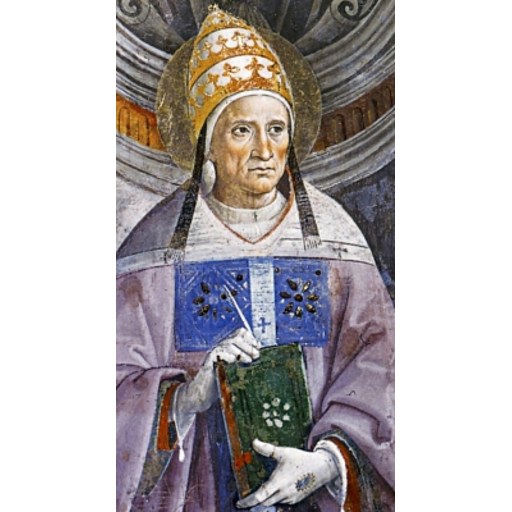
https://catholicsaints.info/catholic-encyclopedia-pope-saint-anterus/
License: unknown
Pope Anterus
Saint- Life Span
- d. 236
- Feast Day
- 3 January
- Gender
- male
- Church
- Catholic
Places
Roles & Family
Biography
Pope Anterus, whose name appears in Latin as Anterus and in Greek as Antheros, was Bishop of Rome from 21 November 235 until 3 January 236. The principal narrative source for his origin is the Liber Pontificalis, which describes him as a Greek, the son of Romulus. No contemporary document records the year of his birth, and later local claims that assign him a specific birthplace in southern Italy are not corroborated by early evidence. He entered office in a moment of crisis. His predecessor, Pontian, had been arrested under the emperor Maximinus Thrax and sent to the mines of Sardinia, where Pontian resigned the episcopate so that the Roman church could elect a new bishop. Anterus’s accession thus represents one of the earliest clearly attested papal resignations followed by a prompt election in the city.
The historical setting was the short but severe imperial reaction against Christian leaders that followed the relatively tolerant years of Alexander Severus. Maximinus’s measures appear to have targeted prominent clergy rather than the whole Christian population. In that climate the Roman community needed a bishop who could hold the church together, maintain communion with other churches, and care for those already in exile or prison. Almost nothing of Anterus’s own teaching or correspondence survives. Later tradition, again through the Liber Pontificalis, credits him with gathering the written acts of the martyrs and placing them in ecclesiastical custody. Scholars generally regard that notice as anachronistic or at least unverifiable, since the great Latin and Greek martyr-act collections belong to a later documentary culture. It remains possible that he took some interest in recording the sufferings of the confessors of his own time.
Anterus died on 3 January 236, after a pontificate of only forty-three days, among the shortest in the history of the Roman see. Medieval tradition numbered him among the martyr popes, sometimes alleging that his concern for martyr records brought him into conflict with the city prefect. The fourth-century Roman liturgical lists, however, commemorate him on 3 January in the Depositio episcoporum as buried in the cemetery of Callistus, and they do not place him in the companion Depositio martyrum. That distinction has led many modern historians to treat his martyrdom as unproven and to allow that he may have died of natural causes. He was interred in the so-called papal crypt of the Catacomb of Callixtus on the Appian Way, the burial place of several third-century bishops of Rome. In 1854 the archaeologist Giovanni Battista de Rossi identified a fragmentary Greek epitaph from that crypt bearing the name Anteros and the title episkopos, which confirmed both the site of the tomb and the Greek form of the pope’s name.
Fabian was chosen to succeed him, according to later story after a dove settled on Fabian as a sign. Anterus has been honored as a saint in the Latin church, with a feast on 3 January. Because he lived centuries before the medieval and modern processes of beatification and canonization, his cult depends on ancient liturgical memory rather than a formal decree by a later pope. Beyond the outline of dates, burial, and Greek origin, the biographical record is extremely thin. No sermons, letters, or disciplinary rulings can be securely attributed to him, and reconstructions of his character or policy remain speculative. He stands as a brief, poorly documented link in the Roman succession during a period of imperial hostility and internal recovery.