Pope Gregory III is a saint of the Catholic Church (d. 741). Pope Gregory III's feast day is celebrated on 28 November.
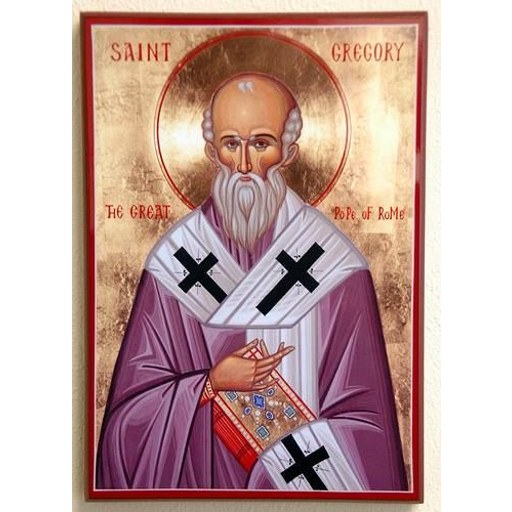
https://www.pinterest.com/ideas/st-gregory-the-great/952330736121/
License: unknown
Pope Gregory III
Saint- Life Span
- d. 741
- Feast Day
- 28 November
- Gender
- male
- Church
- Catholic
Places
Roles & Family
Biography
Pope Gregory III was a native of Syria and the son of a man named John. Surviving sources do not record the year or the precise place of his birth. He was serving as a priest in Rome when Pope Gregory II died in 731. The Roman clergy and people elected him bishop of Rome. He is commonly described as the last pope to seek confirmation of his election from the Byzantine authorities in Italy, a sign of the still-acknowledged though weakening formal link between the Roman see and the Eastern Roman Empire.
The defining conflict of his pontificate was Byzantine iconoclasm. Emperor Leo III had prohibited the veneration of sacred images. Gregory opposed this policy as his predecessor had done. In 731 he convened a synod in Rome that condemned iconoclasm and declared those who destroyed images of Christ, the Virgin, and the saints to be separated from the Church. Letters and envoys to Constantinople did not change imperial policy. In retaliation the emperor seized papal estates in Sicily and southern Italy and transferred the ecclesiastical provinces of Sicily, Calabria, and Illyricum from Roman to Constantinopolitan jurisdiction, a lasting reduction of papal authority in those regions.
In Italy Gregory faced military pressure from the Lombards under King Liutprand, who occupied towns of the Roman duchy. Unable to obtain effective help from Byzantium, he turned to the Franks. He sent an embassy to Charles Martel, mayor of the palace, with gifts that included keys from the tomb of Saint Peter, seeking an alliance and military aid. Charles received the mission with honor but did not intervene in Italy. Gregory also supported the Anglo-Saxon missionary Boniface in the German lands, granting him the pallium as archbishop, authorizing him to organize dioceses, and corresponding with him on questions of discipline and the evangelization of Germanic peoples.
Gregory was active as a restorer and founder of churches in Rome. He established a monastery at the church of Saint Chrysogonus and built an oratory in Saint Peter's Basilica dedicated to the Savior and All Saints, furnishing it with relics of apostles and martyrs; this foundation is associated with the growing observance of a feast of All Saints. He provided for the decoration of churches and the maintenance of the liturgy. He died in Rome on 28 November 741 and was buried in Saint Peter's Basilica in the oratory he had erected. He was succeeded by Pope Zachary. The Catholic Church venerates him as a saint, and his feast is kept on 28 November.