Pope Julius is a saint of the Catholic Church (d. 352). Pope Julius's feast day is celebrated on 12 April.
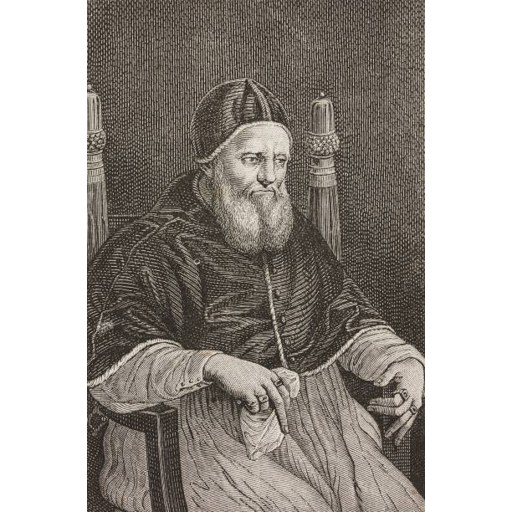
https://gettyimages.com/photos/pope-julius-i
License: unknown
Pope Julius
Saint- Life Span
- d. 352
- Feast Day
- 12 April
- Gender
- male
- Church
- Catholic
Places
Roles & Family
Biography
Pope Julius I was Bishop of Rome from 337 until his death in 352. The Liber Pontificalis describes him as a Roman by origin, the son of a man named Rusticus; no reliable source records the year of his birth. He succeeded Pope Mark after a short vacancy and governed the Roman church during the decades that followed the Council of Nicaea, when the Arian controversy continued to unsettle relations among the Eastern and Western churches and among the sons of Constantine. His pontificate is documented above all through his dealings with exiled Nicene bishops and through a handful of later Roman notices about churches and burial.
Julius is remembered chiefly for his support of Athanasius of Alexandria and of other bishops who had been deposed by synods dominated by Eusebian or Arian parties. After Athanasius was driven from Alexandria he took refuge in Rome, as did Marcellus of Ancyra. Julius assembled a synod in Rome, generally placed in 340 or 341, which heard their cases and acquitted them. He then addressed a substantial letter to the Eastern bishops gathered at Antioch. In that letter he protested that so grave a matter as the see of Alexandria ought not to have been judged without reference to Rome, defended the innocence of Athanasius on the evidence presented at Rome, and asserted a Roman right to be consulted in the trial of bishops. The letter is one of the most important fourth-century witnesses to Roman claims of appellate authority, though Eastern churches did not accept that claim in the form Julius stated it.
Imperial and episcopal politics produced the Council of Sardica (modern Sofia), held about 343. Many Eastern bishops withdrew; the remaining, largely Western, assembly confirmed Athanasius and adopted canons that allowed appeals to the Bishop of Rome in certain disputes involving bishops. Those canons entered the Latin canonical tradition and were later cited in defence of Roman jurisdiction, even though they were not received in the same way in the East. Julius also used his position to aid the restoration of other Nicene exiles when political circumstances permitted. His correspondence and the Sardican canons together form the core of what can be known of his doctrinal and disciplinary policy.
Roman tradition, again chiefly the Liber Pontificalis, credits Julius with building activity in the city: a basilica in Rome often identified with the later Santa Maria in Trastevere (associated with the old titulus of Callistus) and another foundation across the Tiber, together with work in the cemeteries. Later writers sometimes attached liturgical regulations, including notices about the date of Christmas, to his name; such attributions are not securely contemporary and should be treated with caution. He died in Rome on 12 April 352 and was buried in the Cemetery of Calepodius on the Via Aurelia. His feast is kept on that day. He has been venerated as a saint in the Roman church from antiquity; there was no later papal process of canonization in the medieval or modern sense.