Potapy Emelianov is a venerable of the Catholic Church (1884 - 1936).
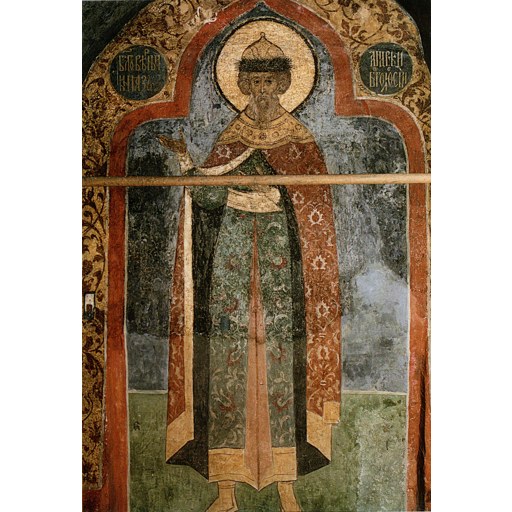
https://en.wikipedia.org/wiki/Passion_bearer
License: unknown
Potapy Emelianov
Venerable- Life Span
- 1884 - 1936 (age 52)
- Gender
- male
- Church
- Catholic
Places
Roles & Family
Biography
Potapy Emelianov (Russian: Potapii or Potapy Feofanovich Emelianov) was a priest of the Russian Greek Catholic Church who came to Catholicism from the Russian Old Believer tradition. He was born in 1884 in the Russian Empire into an Old Believer family and was formed and ordained as a priest among the priestly Old Believers, the branch of that movement that retained bishops and a regular parish clergy. By the years of the First World War and the revolutions of 1917 he was already serving as a parish priest. The fall of the imperial order, a short-lived opening for religious experiment, and contact with the small community of Russian Catholics of the Byzantine rite prepared the way for a change of ecclesial allegiance that would define the rest of his life.
In 1918 Emelianov and the faithful of his parish at Nizhnaya Bogdanovka (then in the Kharkov Governorate of the former empire; now in Luhansk Oblast) were received into full communion with the Catholic Church while keeping the Byzantine liturgy and a Russian recension of rite and custom. The reception belonged to the brief history of the Exarchate for Russian Catholics, whose exarch was Leonid Feodorov, working with the support of Metropolitan Andrey Sheptytsky of the Ukrainian Greek Catholic Church. For a short time the parish existed as a Greek Catholic community of Great Russian and Old Believer background, an unusual counterpart to the better-known Greek Catholic populations of Galicia and Belarus. Emelianov thereafter ministered as a Byzantine-rite Catholic priest under conditions of civil war, famine, and growing Soviet hostility to any form of union with Rome.
Soviet authorities treated Eastern Catholics as politically suspect and as remnants of a forbidden uniate policy. Emelianov was arrested more than once during the 1920s. He was eventually condemned and sent to the Solovki special camp on the Solovetsky Islands in the White Sea, which held a large concentration of bishops and priests of the Orthodox, Catholic, and other churches. Catholic clergy imprisoned at Solovki, Emelianov among them, are attested in camp memoirs and later historical studies; they sought to celebrate the liturgy and to support fellow inmates when the regime allowed it. Forced labor, hunger, disease, and repeated transfers destroyed the health of many of the imprisoned clergy.
Emelianov died on 14 August 1936 while still a prisoner of the Soviet system. The exact place of death and the site of his burial are not firmly established in published sources, a common fate for those who perished in the camps and exile of the 1930s. He is remembered in historical writing on the Russian Greek Catholic Church as a priest who suffered for communion with Rome. He has not been formally beatified or canonized by the Holy See, and important details of his birthplace, family life, and last years remain sparsely documented. What can be said with confidence is that he represents the little-known Russian Byzantine Catholic presence that was almost entirely destroyed by Soviet persecution in the first two decades after 1917.