Potitus is a saint of the Catholic Church. Potitus's feast day is celebrated on 14 January. Potitus is the patron saint of Ascoli Satriano;San Potito Sannitico;San Potito Ultra.
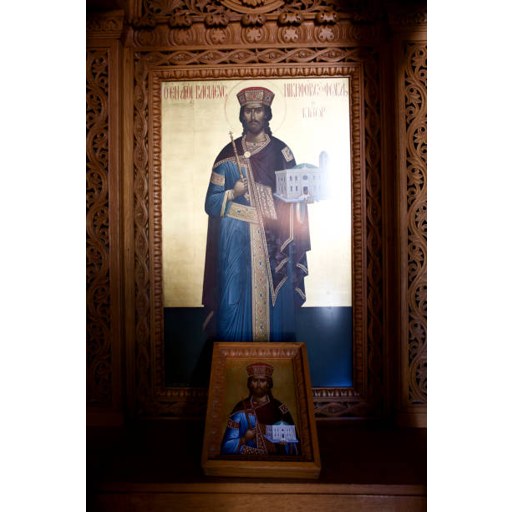
https://gettyimages.com/photos/saint-titus
License: unknown
Potitus
Saint- Feast Day
- 14 January
- Gender
- male
- Church
- Catholic
Places
Roles & Family
Patronage
Ascoli Satriano;San Potito Sannitico;San Potito Ultra
Biography
Saint Potitus, known in Italian as San Potito, is a Christian martyr whose historical existence is accepted principally on the basis of an early medieval cult in southern Italy rather than on contemporary documentation. The only extended account of his life is a Latin passio that survives in several recensions, none of them earlier than the early Middle Ages and all of them regarded by modern hagiographers as largely legendary. According to this tradition, Potitus was born at Serdica, the city later known as Sofia, in the Balkan provinces of the Roman Empire, and lived in the second century during the reign of the emperor Antoninus Pius. The legend describes him as the son of a pagan father, who converted to Christianity as a boy, received baptism, and immediately began to work miracles of healing and exorcism.
The passio then follows a familiar pattern of late antique martyr acts. Potitus is said to have left his homeland, to have confronted imperial authority, and to have delivered the emperor’s daughter from demonic possession. Arrested for his faith, he endured a succession of tortures—scourging, fire, and exposure to wild beasts—before being beheaded, still an adolescent of about thirteen years. Different versions locate the martyrdom at Tricarico in Lucania, in the neighborhood of Naples, or at a station on the Via Appia. Because the narrative is filled with anachronisms and literary borrowings, neither the Balkan origin, the precise reign, the age at death, nor the place of execution can be treated as historically secure. What the legend does attest is the desire of southern Italian churches to possess an early martyr of their own.
The cult of Potitus is firmly documented in Apulia and Campania from the early medieval period. Ascoli Satriano (the ancient Ausculum in Daunia) became the principal center: a Benedictine monastery dedicated to the saint existed there, and his relics were enshrined in the local church that still bears his name. Portions of the relics were translated to Naples and to other churches in the kingdom of Naples, spreading the devotion. Local calendars keep his feast on 14 January, a date that may commemorate a translation rather than the legendary day of martyrdom; older martyrologies, including some recensions associated with Usuard, enter a Potitus on 1 July. He appears as the patron of Ascoli Satriano and of several communes that took his name, such as San Potito Sannitico and San Potito Ultra. Popular devotion has sometimes invoked him against demonic affliction, in memory of the exorcism attributed to him in the passio, but no extensive official list of patronages was ever issued by the Holy See.
Potitus was never a bishop of Rome, nor a patriarch of any Eastern see, nor a member of a religious order. The hagiographical tradition presents him as an unmarried youth who died without descendants. His canonization belongs to the pre-congregational era of popular and episcopal recognition of martyrs; no formal process of beatification or canonization in the modern sense is recorded. Historians therefore treat Saint Potitus as a figure whose cult is historically real and whose personal biography remains, beyond the fact of an early martyr venerated under that name, largely irrecoverable.