Priest Fortunatus is a saint of the Catholic Church.
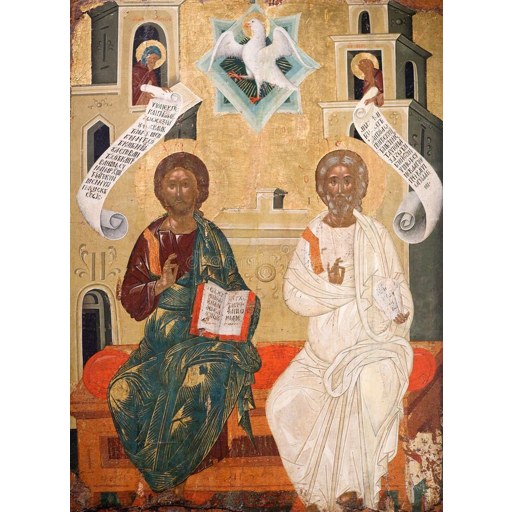
https://dreamstime.com/photos-images/painting-priest.html
License: unknown
Priest Fortunatus
Saint- Gender
- male
- Church
- Catholic
Roles & Family
Biography
The designation Priest Fortunatus does not correspond to a single, unambiguously identified historical figure in the surviving sources. Fortunatus, a Latin personal name meaning fortunate or blessed, was borne by a number of Christian clerics in late antiquity and the early Middle Ages. Martyrologies, the Dialogues of Gregory the Great, local Italian cults, and the New Testament itself mention men of this name who served as priests, deacons, or close collaborators of apostles and bishops. Because the present subject is identified only by office and name, with no accompanying see, century, or feast, a unique biography cannot be assigned without conjecture. What follows therefore surveys the principal priests and clerics named Fortunatus who are attested in reliable or at least long-standing ecclesiastical tradition, while remaining explicit about the limits of the evidence.
In the New Testament, a Christian named Fortunatus appears in the First Letter to the Corinthians. Paul writes that he was glad at the arrival of Stephanas, Fortunatus, and Achaicus, who had supplied what the Corinthian community lacked and refreshed his spirit. The passage places Fortunatus in the mid-first century, associated with the church of Corinth and with the household of Stephanas, which Paul describes as the first converts in Achaia. Later Greek and Latin hagiographical tradition sometimes numbered this Fortunatus among the Seventy Disciples and assigned him liturgical commemoration, commonly on 15 June in certain calendars, but those elaborations are not found in the Pauline text itself and cannot be verified from contemporary records. Whether he was ordained a priest is not stated by Paul.
In Italy, several local cults grew up around priests or bishops named Fortunatus. Pope Gregory the Great, writing in the late sixth century, devoted a chapter of his Dialogues to Fortunatus, bishop of Todi in Umbria, a wonder-working pastor of the sixth century whose charity and miracles were still remembered in Gregory’s day; later devotion at Todi treated him as a principal patron, though Gregory already calls him bishop rather than simple priest. A distinct tradition in Umbria, associated with Spoleto, remembers a priest Fortunatus of the fourth or early fifth century, noted for care of the poor; the details of his life are late and largely legendary. At Aquileia, Fortunatus is remembered as the deacon and companion of Bishop Hermagoras, both said to have been martyred in the apostolic or sub-apostolic age and commemorated on 12 July; medieval texts sometimes blur the distinction between deacon and priest. None of these Italian figures can be given a documented year of birth, and even years of death rest on later computation rather than contemporary record.
The most fully documented cleric of the name is Venantius Honorius Clementianus Fortunatus, born in the Veneto in the second quarter of the sixth century, educated at Ravenna, and active in Gaul from about the 560s. He was ordained priest and, toward the end of his life, became bishop of Poitiers. A prolific Latin poet, he wrote hymns still used in the Western liturgy, including the Vexilla Regis and the passion hymn Pange lingua gloriosi proelium certaminis, as well as a Life of Saint Martin and verse epistles to Queen Radegund and the nuns of the Holy Cross at Poitiers. He died at Poitiers around the beginning of the seventh century and has been venerated as a saint, with a feast commonly observed on 14 December. Because he ended his career as a bishop, medieval and modern writers rarely style him simply Priest Fortunatus. In the absence of further identifying data—place of ministry, feast day, or a reliable vita—it is not possible to say which, if any, of these men is the intended subject, and no single set of biographical dates, patronage, or burial place can be assigned with honesty.