Princess Élisabeth of France is a servant of god of the Catholic Church (1764 - 1794).
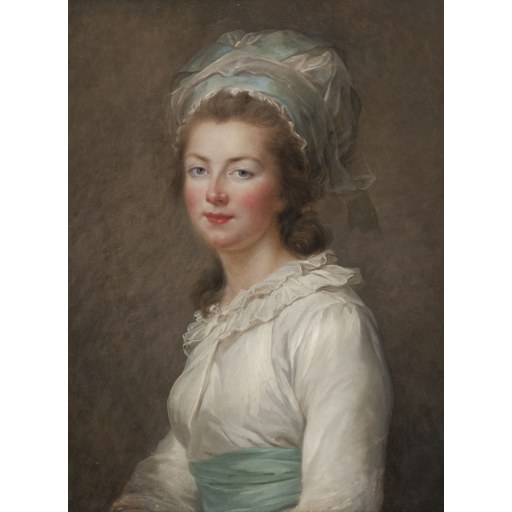
Formerly attributed to Élisabeth Louise Vigée Le Brun
License: Public domain
Princess Élisabeth of France
Servant of God- Life Span
- 1764 - 1794 (age 30)
- Gender
- female
- Church
- Catholic
Places
Relics & Where to Venerate
Location unknown
The bodily remains of Princess Élisabeth of France are a first-class relic. Venerated at Catacombs of Paris.
Roles & Family
Biography
Princess Élisabeth Philippine Marie Hélène de France was born on 3 May 1764 at the Palace of Versailles, the youngest child of Louis, Dauphin of France, heir of King Louis XV, and of Maria Josepha of Saxony. Her father died in 1765 and her mother in 1767, so she was orphaned in early childhood. She was raised at the French court with her surviving siblings, among them the future Louis XVI, Louis Stanislas Xavier (later Louis XVIII), Charles Philippe (later Charles X), and Marie Clotilde, afterward Queen of Sardinia. Governesses and tutors directed her education; she showed a serious temperament, an aptitude for study, and a strong attachment to the Catholic faith that remained the center of her life.
After her brother became king in 1774 she was known at court as Madame Élisabeth. Louis XVI granted her the estate of Montreuil near Versailles, where she kept a relatively simple household, occupied herself with study, music, and gardening, and supported the local poor. Several dynastic marriages were proposed, including matches that would have taken her out of France, but she refused them in order to remain with her brother. She never married and had no children. Memoirs of the period describe her charity, her piety, and the conservative counsel she sometimes offered the king, as well as a manner of life more austere than was usual in the high aristocracy of late eighteenth-century Versailles.
When the Revolution began she declined to emigrate and stayed with the royal family. She was with Louis XVI and Marie Antoinette when the court was forced from Versailles to the Tuileries in October 1789, took part in the flight to Varennes in 1791, and endured the assault on the Tuileries in August 1792. The family was then imprisoned in the Temple. After the king's execution in January 1793 and the queen's removal to the Conciergerie, Élisabeth remained in the Temple with her niece Marie-Thérèse Charlotte and the young Louis XVII, helping to care for them under increasingly harsh conditions. In May 1794 she was separated from them, taken to the Conciergerie, and tried by the Revolutionary Tribunal on charges of corresponding with émigrés and of counter-revolutionary activity.
She did not disavow her loyalty to her brother or her Catholic faith. Condemned to death, she was guillotined on 10 May 1794 in the Place de la Révolution in Paris, at the age of thirty. Contemporary and later accounts describe her composure on the scaffold and her efforts to encourage other condemned prisoners. Her body was buried in a mass grave at the Cimetière des Errancis; remains from that cemetery were later transferred to the Catacombs of Paris and were never individually identified. In subsequent generations she became a figure of Catholic and royalist memory. A cause for her beatification was introduced in the twentieth century, and she is honored as a Servant of God, though she has not been beatified or canonized.