Procopius of Decapolis is a venerable of the Catholic Church. Procopius of Decapolis's feast day is celebrated on 27 February.
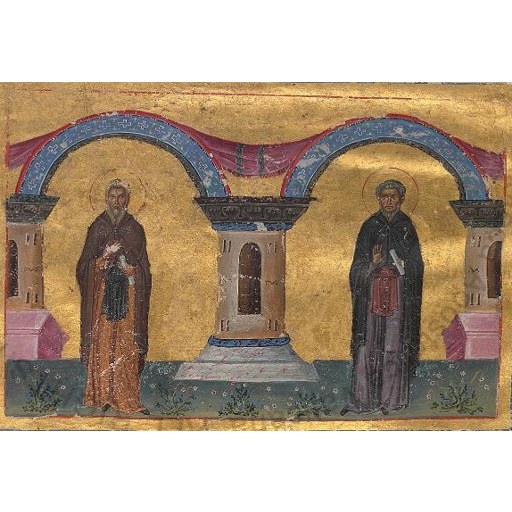
Authors of Menologion of Basil II (circa 985 AC, Constantinople), Byzantine manuscript illuminators[1]: Pantoleon with Georgios, Michael the Younger, Michael of Blachernae, Symeon, Symeon of Blachernae, Menas, and Nestor (Online on Vatican site)
License: Public domain
Procopius of Decapolis
Venerable- Feast Day
- 27 February
- Gender
- male
- Church
- Catholic
Roles & Family
Biography
Saint Procopius of Decapolis, also called Procopius the Confessor, was an eighth-century Byzantine monk remembered for his defense of the veneration of icons during the first period of Iconoclasm. Liturgical biographies in the Eastern synaxaria state that he was a native of Decapolis—a name that in late antique and Byzantine usage could refer either to the league of cities east of the Jordan or to a district in Asia Minor—and that he entered the monastic life while still young. In the monastery he followed a severe rule of fasting, prolonged prayer, and tears. The same sources attribute to him the grace of wonder-working, though no contemporary chronicle confirms particular miracles.
Under Emperor Leo III the Isaurian (reigned 716–741), imperial policy turned against sacred images. Procopius openly upheld iconodulism and was arrested together with his companion, the monk Basil (commemorated on 28 February). They were imprisoned and tortured. The Roman Martyrology adds that Procopius’s beard was torn out and that he was driven into exile; the Eastern lives speak more generally of imprisonment and torment. Because he survived, the Church honors him as a confessor rather than a martyr.
After Leo III died in 741 the two monks were released. Hagiographers relate that Procopius then lived in relative peace, continuing his monastic vocation and guiding others in virtue and piety until he died at an advanced age in the middle of the eighth century. Neither an exact year of death nor a documented place of death or burial has been preserved. Later iconoclastic reigns, especially that of Constantine V, make the traditional notice of an untroubled old age difficult to situate with precision, and the accounts remain those of synaxaria rather than of court historians.
Veneration of Procopius rests almost entirely on the calendars. The Eastern Orthodox Church keeps his feast on 27 February, often beside that of Basil on the following day. The Roman Martyrology likewise records him on 27 February and associates the memory of his confession with Constantinople. He is not named in the chronicle of Theophanes or other near-contemporary narratives, so the reconstruction of his life cannot be pressed beyond the liturgical tradition. He is a different figure from the fourth-century martyr Procopius of Scythopolis, whose cult belongs to the Palestinian Decapolis and whose feast is in July.