Prophet Amos is a saint of the Catholic Church. Prophet Amos's feast day is celebrated on March 31 (Roman Catholic); June 15 (Eastern Orthodox).
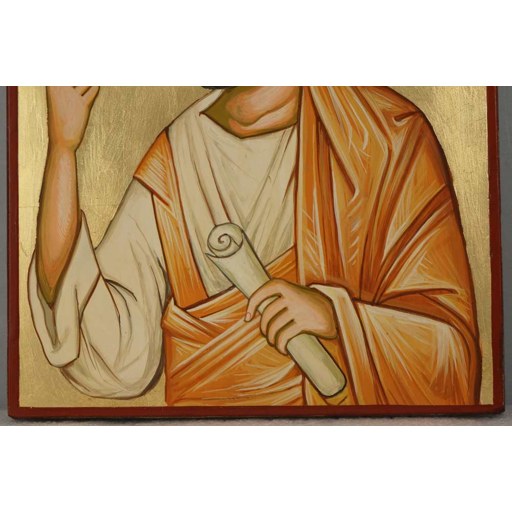
https://www.blessedmart.com/shop/hand-painted-icons/male-saints-icons/prophet-amos/
License: unknown
Prophet Amos
Saint- Feast Day
- March 31 (Roman Catholic); June 15 (Eastern Orthodox)
- Gender
- male
- Church
- Catholic
Places
Roles & Family
Biography
Amos was a Hebrew prophet active in the eighth century BCE and is counted among the Twelve Minor Prophets of the Hebrew Bible. The superscription of the Book of Amos identifies him as one of the shepherds of Tekoa, a town in the Judean hill country about ten to twelve miles south of Jerusalem. He also worked as a dresser of sycamore figs. Amos distinguished himself from professional prophets and prophetic guilds, stating that the Lord had taken him from following the flock and sent him to prophesy to Israel. His ministry is placed in the reigns of King Uzziah of Judah and King Jeroboam II of Israel, two years before a memorable earthquake, a setting that historians generally assign to the mid-eighth century BCE, a time of relative prosperity and territorial expansion in the Northern Kingdom.
Though he came from Judah, Amos delivered his oracles chiefly against the Northern Kingdom of Israel, speaking at Bethel, a major royal sanctuary. The book that bears his name begins with judgments on neighboring peoples, including Damascus, Gaza, Tyre, Edom, Ammon, and Moab, then turns to Judah and, with particular force, to Israel. He condemned oppression of the poor, dishonest trade, corrupt courts, and the self-indulgence of the wealthy. He insisted that sacrificial worship and festivals were worthless without justice and righteousness, and he warned that the Day of the Lord would bring darkness rather than deliverance for a people who presumed on their covenant status. He predicted military disaster and exile beyond Damascus.
The biblical text recounts a clash at Bethel with Amaziah, priest of the sanctuary, who told Amos to return to Judah and cease prophesying at the king’s shrine, accusing him of conspiracy against Jeroboam. Amos answered that he had not chosen the prophetic calling himself and announced judgment upon Amaziah’s family. The canonical book does not describe Amos’s death. Later traditions, found in the Lives of the Prophets and related Jewish and Christian sources, alleged that Amaziah had him beaten and that he was killed by a blow to the temples, after which he was buried at Tekoa. These stories are legendary and lack independent historical confirmation.
The Book of Amos is among the earliest prophetic writings to have been preserved as a distinct collection. Its demand that justice roll down like waters and that righteousness, not empty cult, characterize the life of the covenant people has remained influential in Jewish and Christian interpretation. As an Old Testament prophet, Amos was venerated from antiquity rather than formally canonized or beatified in the later medieval sense. The Roman Martyrology commemorates him on 31 March; the Eastern Orthodox Church observes his feast on 15 June.