Publius is a venerable of the Catholic Church. Publius's feast day is celebrated on 22 January. Publius is the patron saint of Floriana.
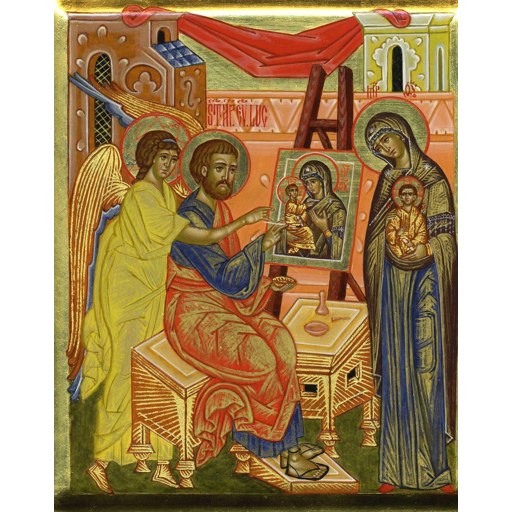
https://www.dailyartmagazine.com/saint-luke-the-ultimate-holy-painter/
License: unknown
Publius
Venerable- Feast Day
- 22 January
- Gender
- male
- Church
- Catholic
Roles & Family
Patronage
Floriana
Biography
The only strictly contemporary written notice of a man named Publius in a first-century Christian source is the account in the Acts of the Apostles. During the voyage that was taking the Apostle Paul to Rome as a prisoner, the ship was wrecked on the island called Melita, universally identified with Malta, an event generally placed around the year 60. Acts 28 records that near the landing place were estates belonging to the leading man of the island, named Publius, who received the survivors and entertained them courteously for three days. Publius's father lay sick with fever and dysentery; Paul went in to him, prayed, laid hands on him, and healed him. When this became known, the rest of the sick on the island came and were cured. The title given to Publius, protos tes nesou (first man of the island), matches a known official designation in Roman Malta, also attested in inscriptions, and indicates that he was the principal local magistrate under Roman administration, Malta then forming part of the province of Sicily. The biblical narrative ends there: it neither records a conversion nor supplies any date of birth or death, nor any later career.
From late antiquity onward, Christian writers and local churches elaborated this brief episode into an episcopal and martyrological career. Maltese tradition has consistently regarded Publius as the first bishop of Malta, converted and perhaps consecrated by Paul, and therefore as the founder of the island's Christian community. Greek and Latin hagiographical collections further identify him with a bishop of Athens of the same name. Eusebius of Caesarea, in the fourth book of his Ecclesiastical History, preserves an extract from a letter of Dionysius of Corinth, written toward the later second century to the church of Athens. Dionysius reminded the Athenians that their former bishop Publius had been martyred in a time of persecution and that Quadratus had been appointed in his place, after which the community's faith had been renewed. Later martyrologies and synaxaria combined the Maltese official, the first bishop of Malta, and the Athenian martyr into a single saint, sometimes also placing him in the succession of Athens after Dionysius the Areopagite. Modern historical criticism treats that identification as unproven: the name Publius was extremely common in the Roman world, Acts does not mention episcopal office, and Eusebius does not connect the Athenian martyr with Malta or with Paul.
The cult of Saint Publius is especially strong in Malta. His feast is kept on 22 January, and he is the patron of Floriana, the suburb of Valletta whose large Baroque collegiate parish church is dedicated to him. Processions and popular devotion there present him as the island's protobishop. In Byzantine and later Orthodox calendars a hieromartyr Publius, bishop of Athens, is commemorated on 13 March; some Western martyrologies list a bishop Publius of Athens on 21 January. No early source gives a year of birth. Proposed years of death, which in various later compilations range through the first half or the middle of the second century, depend on which persecution is assumed and on the unproven merger of the two figures; they cannot be regarded as established. No reliable testimony survives concerning his place of burial, any spouse or children, or membership in a religious order. He was not Bishop of Rome and did not hold a patriarchal see.
In the absence of further primary evidence, the historian can affirm only that a Maltese official named Publius showed hospitality to Paul around the year 60 and that a bishop named Publius of Athens died a martyr at some point before the letter of Dionysius of Corinth, that is, before the last decades of the second century. Everything else belongs to tradition, which has nevertheless had a continuous role in the religious identity of Malta and in the liturgical memory of both East and West. Churches, statues, and the annual festa in Floriana keep that memory alive, while the biblical episode itself remains the earliest documented encounter between Christianity and the Maltese islands.