Q4137242 is a saint of the Eastern Orthodox Church (1684 - 1690). Q4137242's feast day is celebrated on 20 April.
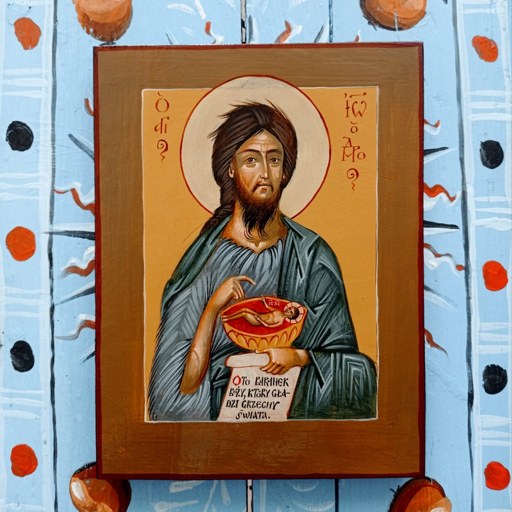
https://www.etsy.com/uk/listing/1518487637/saint-john-the-baptist-picture-icon
License: unknown
Q4137242
Saint- Life Span
- 1684 - 1690 (age 6)
- Feast Day
- 20 April
- Gender
- male
- Church
- Eastern Orthodox
Places
Roles & Family
Biography
Gabriel of Białystok (also known as Gabriel of Belostok or Gabriel of Zabłudów) is a child venerated as a martyr in some jurisdictions of the Eastern Orthodox Church, especially in Russia, Belarus, and parts of Poland. Traditional church accounts place his birth on 2 April 1684 in the village of Zverki (Zwierki) near Zabłudów in Podlachia, then within the Polish-Lithuanian Commonwealth, and describe him as the son of Orthodox peasant parents. Independent, non-hagiographical documentation of his family and early childhood is extremely sparse; almost everything recorded about him derives from the martyrdom legend that took shape in the 1690s.
According to that legend, in April 1690 the six-year-old boy was abducted while his parents were absent, taken to Białystok, and killed by local Jews who supposedly used his blood for ritual purposes connected with Passover—a formulation identical to the medieval blood-libel accusation. His body was said to have been found days later in a field, remaining incorrupt, and was immediately treated as that of a martyr. Contemporary proceedings in the Commonwealth followed the familiar pattern of blood-libel cases: arrests of Jews, use of torture, and outbreaks of anti-Jewish hostility. Modern historical scholarship finds no credible evidence that a ritual murder occurred; the episode is classified with the many unfounded blood libels that circulated in early-modern Eastern Europe and were used to justify persecution.
Local veneration began soon after 1690. The remains were placed in a church at Zabłudów and later translated to other Orthodox sites after the partitions of Poland brought the region under Russian rule. By the nineteenth century the Russian Orthodox Church had accepted the cult, listing Gabriel among locally glorified saints and assigning the feast to 20 April on the Julian calendar. Relics were credited with miracles, particularly healings of children. The cult was largely suppressed in the Soviet period and revived in some post-Soviet Orthodox settings, where churches, icons, and processions dedicated to him reappeared.
The figure remains highly controversial. Jewish organizations and historians have long identified the cult as blood-libel hagiography that has contributed to antisemitic violence in the region, including later pogroms. Restoration of shrines in the late twentieth and early twenty-first centuries has repeatedly drawn protest. Some Orthodox authorities continue to defend the traditional narrative as a matter of faith; others have been more reserved. From a strictly historical standpoint, the securely attested facts are limited: a child died in the Białystok area in 1690, a blood-libel story was attached to the death, and a religious cult subsequently developed and was eventually recognized by the Russian Orthodox Church. Precise details of the boy’s life, the medical cause of death, and the original legal outcome are poorly documented outside the later legendary accounts and must be treated with caution.