Q4137243 is a venerable of the Catholic Church (1684 - 1690). Q4137243's feast day is celebrated on 20 April.
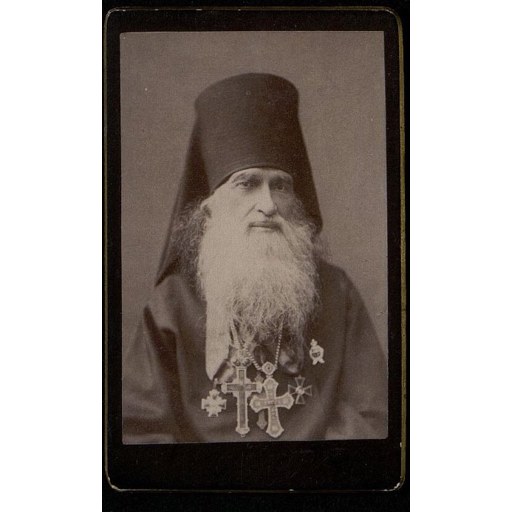
Unknown authorUnknown author
License: CC BY-SA 4.0
Q4137243
Venerable- Life Span
- 1684 - 1690 (age 6)
- Feast Day
- 20 April
- Gender
- male
- Church
- Catholic
Places
Roles & Family
Canonization
Biography
Gabriel of Białystok (also known as Gavriil Belostoksky or Gabriel Białostocki) is commemorated as a child martyr in the Russian Orthodox Church. Church tradition dates his birth to 2 April 1684 in the village of Zverki (Zwierki), near Zabłudów in Podlachia, then in the Polish-Lithuanian Commonwealth and now in western Belarus, and describes him as the son of Orthodox peasants. According to the later vita, in April 1690, around Passover, the six-year-old boy was taken from his home by a Jewish leaseholder associated with Białystok, tortured, and killed; his body was afterwards found and buried at Zverki. The season, the identity of the alleged perpetrator, the torture, and the ritual use of blood are the standard motifs of the European blood-libel legend.
No administrative, judicial, or parish record from 1690 has been shown to confirm that such a kidnapping and murder took place. Historians therefore treat the story as a hagiographical construction rather than a recoverable criminal case. Blood-libel accusations had already appeared in the Polish-Lithuanian lands and later recurred in the Russian Empire, typically amid religious rivalry, disputes over leases, or local crises, and they often led to violence against Jewish communities. The vita of Gabriel, written well after the alleged events, follows this polemical pattern. The child’s existence outside the cult is not independently documented, so the years 1684 and 1690 remain traditional attributions rather than results of critical archival reconstruction.
Ecclesiastical veneration developed in the eighteenth century after remains identified as his were reported to be incorrupt. In 1755 the relics were translated to the Trinity Monastery in Slutsk. In the nineteenth century the Russian Orthodox Church promoted the cult; Gabriel was entered in synaxaria, and his principal feast was fixed on 20 April in the Julian calendar (3 May Gregorian). Relics were moved again during the 1915 wartime evacuations and later divided among churches in the Grodno and Białystok regions. After the end of Soviet rule, Orthodox parishes in Belarus, Russia, and Poland revived public veneration. He is sometimes invoked for the protection of children, but he has no large, formally defined set of patronages.
The modern cult has been controversial. In the late Russian Empire the child-martyr figure was occasionally used to support ritual-murder charges against Jews. Historians, Jewish organizations, and some Christian commentators have objected to the post-1991 revival on the grounds that it perpetuates a discredited antisemitic myth. A historically cautious account therefore presents Gabriel of Białystok as a saint of Orthodox tradition whose legend cannot be treated as a factual report of a seventeenth-century crime, and whose cult history is inseparable from the wider European history of blood libel.