Q4202442 is a saint of the Eastern Orthodox Church (1680 - 1731). Q4202442's feast day is celebrated on 26 November, 9 February. Q4202442 is the patron saint of Siberia;Irkutsk.
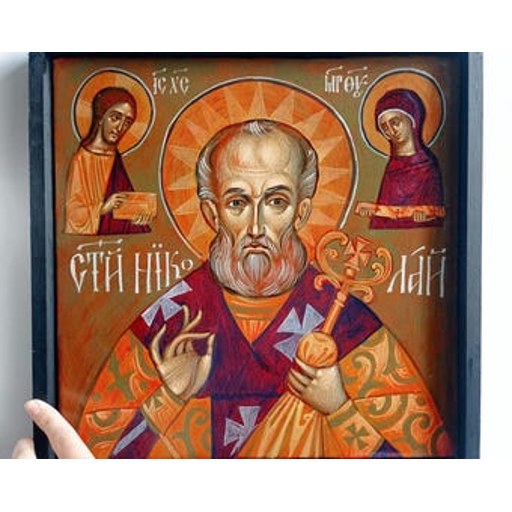
https://www.etsy.com/listing/1223369423/christ-pantocrator-icon-portrait-image
License: unknown
Q4202442
Saint- Life Span
- 1680 - 1731 (age 51)
- Feast Day
- 26 November, 9 February
- Gender
- male
- Church
- Eastern Orthodox
Places
Roles & Family
Patronage
Siberia;Irkutsk
Canonization
Biography
Saint Innocent of Irkutsk, known in the world as Ivan Kulchitsky, was an eighteenth-century Russian Orthodox missionary bishop who became the first occupant of the newly created see of Irkutsk and is venerated as a saint and the heavenly patron of Siberia. He was born circa 1680 into a family of the petty nobility, the Kulchitskys, in the Chernigov lands of Left-bank Ukraine, then subject to the Tsardom of Russia. Details of his early life remain sparse in the surviving sources. He received his formation at the Kiev Mohyla Academy, where he studied theology, philosophy, rhetoric, and languages. Upon completing the course he entered the monastic state, receiving the name Innocent in religion, and was ordained to the holy priesthood as a hieromonk.
During the 1710s Innocent served as a teacher at the Slavic-Greek-Latin Academy in Moscow, the principal higher school of the Russian Church at that period. He was later transferred to Saint Petersburg and appointed prefect of the seminary at the Alexander Nevsky Monastery, an institution closely associated with the reforms of Peter I. In 1721 he was consecrated to the episcopate as Bishop of Pereyaslav with the special charge of leading the Russian spiritual mission to Beijing. The Qing authorities, however, declined to receive a bishop, fearing political implications, and the mission could not proceed as planned. Innocent therefore spent several years in Siberia, residing first at Selenginsk beyond Lake Baikal, in conditions of considerable hardship, while correspondence continued with the Holy Synod and the imperial court.
In January 1727 Empress Catherine I issued a decree establishing an independent Diocese of Irkutsk and Nerchinsk, and Innocent was appointed its first bishop. He took up his duties in Irkutsk the same year. In a territory of enormous extent and mixed population he worked to regularize church administration, to open a school in which both Slavonic letters and the Mongolian language were taught, and to foster missionary activity among the Buryats and other native peoples of the region. Contemporary accounts describe him as living simply, giving alms, and attending personally to the instruction of clergy and laity. His episcopate was brief. He died in Irkutsk in late November 1731 and was interred beneath the church of the Ascension Monastery.
More than three decades later, in 1764, workmen repairing the monastery church uncovered his coffin and found the remains incorrupt. Reports of miracles, particularly healings, multiplied, and local veneration grew. In 1804 the Holy Synod of the Russian Orthodox Church, with the approval of Emperor Alexander I, formally glorified Bishop Innocent and appointed 26 November as his feast day; a second commemoration on 9 February marks the translation of the relics. The relics themselves were moved at various times, suffered confiscation and scientific examination during the Soviet period, and were eventually returned to ecclesiastical custody. They now rest in the Znamensky Monastery in Irkutsk. Saint Innocent is invoked as the protector of Siberia, of the city and diocese of Irkutsk, and of those engaged in missionary labor in Asia.