Q4202491 is a venerable of the Catholic Church (1886 - 1929). Q4202491's feast day is celebrated on 28 December.
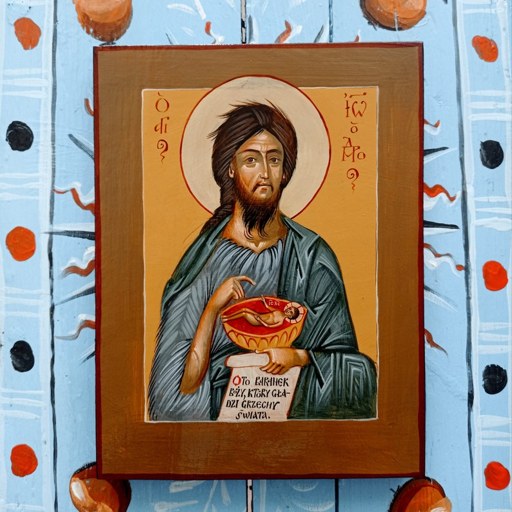
https://www.etsy.com/uk/listing/1518487637/saint-john-the-baptist-picture-icon
License: unknown
Q4202491
Venerable- Life Span
- 1886 - 1929 (age 43)
- Feast Day
- 28 December
- Gender
- male
- Church
- Catholic
Places
Roles & Family
Canonization
Biography
Vladimir Alekseyevich Troitsky was born on 13 September 1886 in the village of Lipitsy, Kashira district, Tula Governorate, in the Russian Empire, the son of a parish priest. He received a full ecclesiastical education, attending theological schools and the Tula Theological Seminary before entering the Moscow Theological Academy, from which he graduated in 1910. Retained at the academy as a professor of the history of dogma, he became one of the leading Russian Orthodox theologians of his generation. His scholarly work drew on the Church Fathers and argued that the Church is a divine-human organism, the Body of Christ, rather than a merely human or juridical institution; he wrote against both Roman Catholic and Protestant ecclesiologies and against contemporary modernist and schismatic tendencies.
In 1913 he was tonsured a monk with the name Hilarion and ordained hieromonk, later becoming archimandrite and inspector of the Moscow Theological Academy. After the 1917 Revolution and the onset of Soviet persecution of the Church, he was consecrated in 1920 as Bishop of Vereya, a vicar of the Moscow diocese, and subsequently raised to archbishop. He was a close collaborator of Patriarch Tikhon and a determined opponent of the Renovationist (Living Church) schism, which was encouraged by the Soviet authorities. In sermons and writings he insisted that the Church could not be reformed or subordinated according to state pressure without ceasing to be the Church.
The Soviet regime arrested him repeatedly. From 1923 he was imprisoned and then sent to the Solovetsky camp (Solovki), where many clergy were held. Even in the camp he continued a pastoral ministry among prisoners. In 1929, during transfer from Solovki, he contracted typhus and died on 28 December 1929 in a prison hospital in Leningrad, at the age of forty-three.
The Russian Orthodox Church glorified him as a hieromartyr (New Martyr) in 1999. He is commemorated on 28 December (15 December Old Style). His theological essays on the unity and nature of the Church remain part of twentieth-century Orthodox theological literature.