Q4501474 is a saint of the Catholic Church (1869 - 1920).
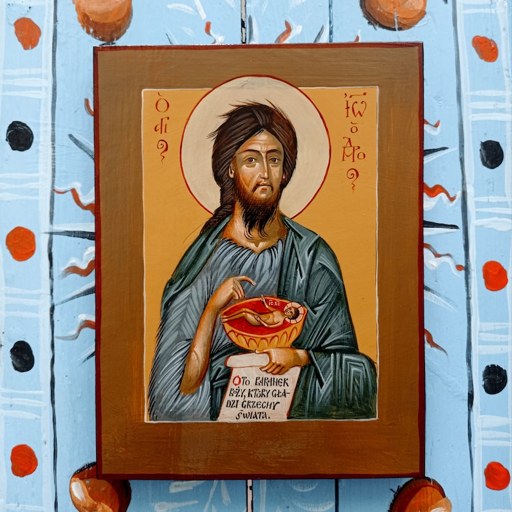
https://www.etsy.com/uk/listing/1518487637/saint-john-the-baptist-picture-icon
License: unknown
Q4501474
Saint- Life Span
- 1869 - 1920 (age 51)
- Gender
- male
- Church
- Catholic
Places
Roles & Family
Biography
Bishop Chrysanthus (secular name Vladimir Ivanovich Shchetkovsky) was a hierarch of the Russian Orthodox Church whose life ran from the last decades of the Russian Empire into the first years of Bolshevik rule. He was born in 1869 into a priestly family in the southern provinces of the empire and was educated inside the Church’s own school system. After a theological seminary in Odessa he studied at the Kiev Theological Academy, the principal higher ecclesiastical school of the southwestern empire, and completed the course in the 1890s as a candidate of theology. During or immediately after those academy years he was tonsured a monk with the name Chrysanthus and ordained hierodeacon and then hieromonk, entering the celibate academic monasticism that supplied a large share of the Russian episcopate in that generation.
He then served as a teacher and inspector in theological seminaries, the usual path for monk-scholars marked out for the episcopate. In the mid-1900s he was appointed rector of the Tomsk Theological Seminary in Siberia and raised to the rank of archimandrite. Tomsk was a major center of Orthodox education east of the Urals, and the seminary rectorship placed him in the network of missionary and settler dioceses of Siberia. In 1908 he was consecrated bishop and assigned as Bishop of Chelyabinsk, a vicar of the Orenburg diocese. Chelyabinsk, on the Trans-Siberian Railway, was a rapidly growing town of workshops, trade, and industry; a vicar there assisted the diocesan bishop of Orenburg in the care of Russians, Cossacks, and non-Russian peoples of the southern Urals.
His episcopal years coincided with the crises of late imperial Russia, the First World War, the revolutions of 1917, and the Civil War. The Ural region was contested by Bolshevik forces, the Czechoslovak Legion, Kolchak’s White army, and local Cossack hosts. Diocesan administration was broken up, church property was seized, and clergy suffered violence from more than one side. Standard directories of the Russian hierarchy record that Bishop Chrysanthus died in 1920, as Soviet power was consolidated in the Urals after the collapse of the White movement in Siberia. The exact place, cause, and legal circumstances of his death are not established with full clarity in those published lists; many bishops who died in that year perished in prison, of epidemic disease, or by execution.
Diocesan archives from the Civil War years were often destroyed or scattered, so a detailed account of his sermons, pastoral letters, or private life is not available in commonly cited historical works. He belongs to the generation of academically trained monk-bishops consecrated as vicars in industrial and frontier sees just before 1917 who did not survive the first wave of Soviet anti-religious policy. Later research on the New Martyrs and Confessors of the Russian Church has collected names of bishops who perished between 1918 and 1922, but whether Chrysanthus has been formally included in a synodal canonization or in local liturgical commemoration must be confirmed from the official publications of the Moscow Patriarchate. His burial place is not securely identified in the sources used for this notice.