Quinidius is a saint of the Catholic Church (d. 579). Quinidius's feast day is celebrated on 15 February.
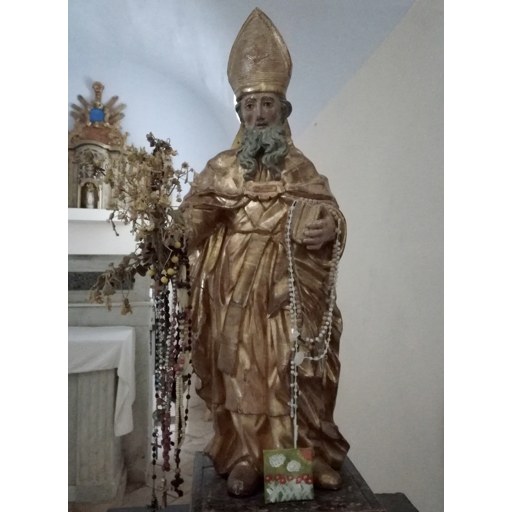
Technob105
License: CC BY-SA 4.0
Quinidius
Saint- Life Span
- d. 579
- Feast Day
- 15 February
- Gender
- male
- Church
- Catholic
Places
Roles & Family
Biography
Quinidius, known in French as Quenin or Saint Quenin, was a sixth-century Christian hermit, monk, and bishop whose life is associated with Provence in southeastern Gaul, in what is now France. He is commemorated as a saint in the Catholic tradition, principally as bishop of Vaison. Like many holy figures of the Merovingian period, Quinidius is poorly documented in contemporary texts; the outline of his career is preserved through later hagiographical tradition, local cult, and brief notices in martyrologies and historical summaries rather than through a detailed early vita. He is therefore best understood as a regional saint of Provence whose memory was strong enough to leave a lasting liturgical and architectural imprint at Vaison-la-Romaine.
Traditional accounts state that Quinidius was born at Vaison, the ancient Gallo-Roman city of Vasio Vocontiorum, to a Christian family. He is said to have withdrawn from ordinary life to become a hermit in the countryside around Toulon, pursuing solitude and ascetic discipline. He later entered the monastery of Lérins, situated on the island of Saint-Honorat off the Provençal coast. Lérins, founded in the early fifth century by Honoratus, was among the most important monastic communities in Gaul, noted for its austerity and for forming clergy who later occupied episcopal sees. Quinidius’s passage from eremitical solitude to the cenobitic life at Lérins fits a well-attested pattern among Gallic ascetics of late antiquity and the early Middle Ages.
From Lérins he was called to the episcopate as bishop of Vaison, the church of his native city. The diocese of Vaison belonged to the ecclesiastical orbit of Arles and already had a long history by the sixth century. Quinidius’s tenure would have fallen in a time of political change in the Rhône valley and Provence, as Frankish power consolidated over territories that had been under Burgundian and earlier Mediterranean successor-kingdom influence, while the Gallic episcopate continued to regulate doctrine, discipline, and church property through councils. No securely attributed sermons, letters, or conciliar signatures allow a close reconstruction of his pastoral government; the tradition remembers him above all as an ascetic elevated to the see.
Quinidius is generally reported to have died about 579, and his feast day is observed on 15 February. Devotion to him remained centered on Vaison-la-Romaine. The Chapel of Saint-Quenin there, distinguished by an uncommon early medieval triangular apse, is linked to his cult and is often cited among the notable early Christian or pre-Romanesque monuments of the town, alongside the cathedral of Notre-Dame de Nazareth and the extensive Roman remains of Vasio. Beyond this local veneration, Quinidius did not acquire a wide international cult or an extensive list of recorded patronages. He stands as a representative of the monk-bishop type in sixth-century Gaul: formed in Provençal monasticism and entrusted with a civic see, honored after death by the community he had served.