Quirinus is a saint of the Catholic Church (d. 309). Quirinus's feast day is celebrated on June 4. Quirinus is the patron saint of Sisak.
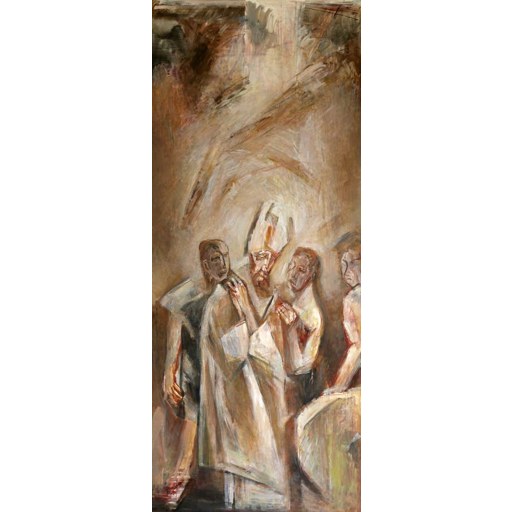
https://www.dreamstime.com/photos-images/saint-quirinus.html
License: unknown
Quirinus
Saint- Life Span
- d. 309
- Feast Day
- June 4
- Gender
- male
- Church
- Catholic
Roles & Family
Patronage
Sisak
Biography
Saint Quirinus, also known as Quirinus of Siscia, served as bishop of Siscia in the Roman province of Pannonia, a see located at the site of modern Sisak in Croatia. No contemporary records survive concerning the date or place of his birth, his parentage, or the course of his life before he appears as the leader of the Christian community in that city. He belongs to the generation of bishops who guided the Church in the Danubian provinces through the final and most systematic of the pagan imperial persecutions.
The account of his martyrdom is contained in a Latin passion narrative whose historical kernel is generally accepted even if later embellishments are present. Quirinus was arrested for his refusal to sacrifice to the gods in accordance with imperial edicts. After examination at Siscia he was sent onward to the provincial governor residing at Savaria (present-day Szombathely). There he endured torture yet would not recant. Sentence was passed that a millstone be fastened about his neck and that he be cast into a river. The hagiographical tradition reports that the millstone floated upon the water, allowing the bishop to exhort the assembled Christians at length before he at last sank and drowned. Martyrological sources commonly assign the event to the year 309, during the rule of Galerius. Independent confirmation of the exact year is lacking, yet the martyrdom of a bishop of Siscia named Quirinus in the Galerian persecution is consistent with the known history of the Pannonian church.
The cult of Saint Quirinus developed rapidly. Already by the late fourth century the poet Prudentius included a hymn in his honour in the Peristephanon, evidence that knowledge of the martyr had spread to the western provinces. His burial place became a focus of devotion, and in the following centuries relics believed to be his were translated to churches in Italy and elsewhere. The Roman Martyrology records his feast on 4 June, the day on which he continues to be commemorated, especially in Croatia.
Several other saints of the early Church and of the medieval period also carried the name Quirinus, notably a Roman martyr whose relics were later enshrined at Neuss on the Rhine and a figure venerated at Tegernsee Abbey in Bavaria. Medieval writers occasionally conflated these distinct cults. The bishop-martyr of Siscia, however, remains a separate historical personage, one of the principal witnesses to Christianity in late-Roman Pannonia, and he is honoured as a patron of the city of Sisak.