Ragnebert de Baugé is a saint of the Catholic Church (d. 680). Ragnebert de Baugé's feast day is celebrated on 13 June. Ragnebert de Baugé is the patron saint of Saint-Rambert-en-Bugey;Saint-Rambert-sur-Loire.
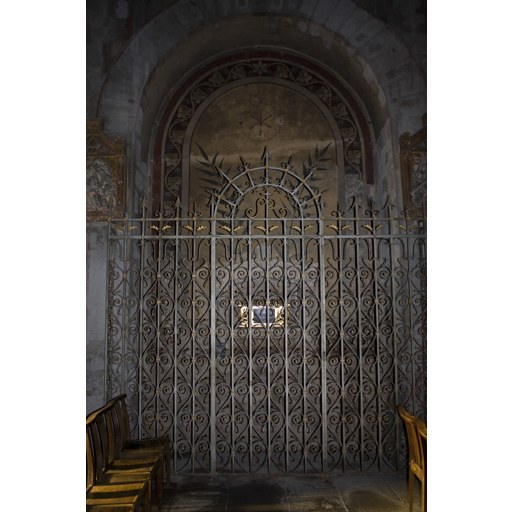
D Villafruela
License: CC BY-SA 3.0
Ragnebert de Baugé
Saint- Life Span
- d. 680
- Feast Day
- 13 June
- Gender
- male
- Church
- Catholic
Places
Roles & Family
Patronage
Saint-Rambert-en-Bugey;Saint-Rambert-sur-Loire
Biography
Ragnebert de Baugé, known in Latin as Ragnebertus and in later French devotion as Saint Rambert, was a Frankish aristocrat of the seventh century whose death was remembered as a martyrdom. Hagiographic tradition places his birth at Baugé in Anjou, within the Neustrian portion of the Frankish realms, and identifies his father as Radbert, a duke of the palace. No contemporary charter or chronicle records his birth, and no reliable year of birth has been preserved; figures sometimes offered in later literature are conjectural. He is said to have been educated and to have served at the Merovingian court during the reign of Chlothar III and the early years of Theuderic III, a period in which real power often lay with the mayors of the palace rather than with the kings themselves.
The later seventh century in Neustria was marked by the dominance of Ebroin, mayor of the palace, a figure repeatedly associated in both narrative sources and modern histories with the violent suppression of aristocratic rivals. According to the vita of Ragnebert, Ebroin conceived a hatred for the young noble, whether from jealousy of his standing at court, fear of his family connections, or political opposition. Ragnebert was stripped of his position and banished to the remote country of Bugey, on the eastern margins of the Lyonnais in Burgundy. There he lived in relative obscurity near a religious community. The exile did not satisfy Ebroin, who, the hagiographers relate, sent men to kill him.
Ragnebert was put to death in the wooded region of Bugey around the year 680. The traditional narrative presents him as having been warned of the approaching assassins yet refusing to save himself by flight, and as having been slain while at prayer, a pattern common in Merovingian martyr acts. His body was taken up and buried at the place that thereafter bore his name, Saint-Rambert-en-Bugey, in what is now the department of Ain in France. A church and then a monastery rose over the tomb. Pilgrims reported miracles, and the cult of the martyr spread through the dioceses of Lyon, Belley, and neighboring sees. The abbey of Saint-Rambert-en-Bugey became the principal centre of his memory; other settlements, including Saint-Rambert-sur-Loire in the Forez, also took his name.
Ragnebert’s feast is kept on 13 June, the date given in the Roman Martyrology, which commemorates him as a martyr in the territory of Lyon. He was not canonized by a formal papal process of the kind that developed in the later Middle Ages; his sanctity was recognized by local episcopal authority and by continuous popular cult, as was customary for Merovingian-era saints. No spouse or children are named in the surviving accounts, nor is he described as a professed monk, though his exile associated him with monastic surroundings and his shrine was served by monks. Modern historians generally accept that a Neustrian noble named Ragnebert may well have been eliminated during Ebroin’s ascendancy, a context amply attested by other sources for the 670s and 680, while treating the speeches, miracles, and many picturesque details of the medieval vita as literary convention rather than recoverable biography. His memory remains primarily local, tied to the Bugey and to the churches that still bear his name.