Règul d'Arle is a saint of the Catholic Church.
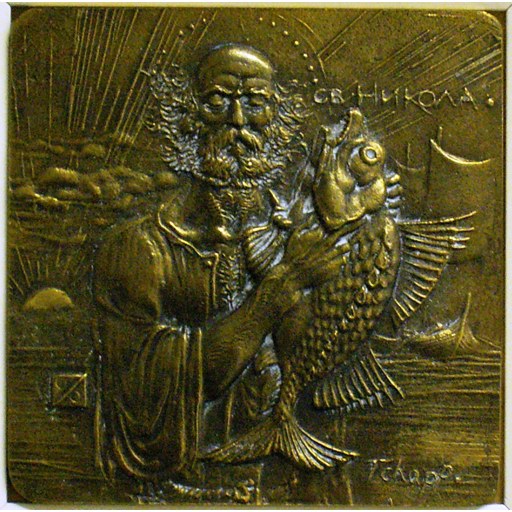
https://en.wikipedia.org/wiki/Icon
License: unknown
Règul d'Arle
Saint- Gender
- male
- Church
- Catholic
Places
Roles & Family
Biography
Règul d'Arle is an obscure figure whose name, in Occitan and Catalan form, associates him with Arles (Arle), the ancient Roman city of Arelate in Provence. Arles was one of the principal ecclesiastical centres of late-antique Gaul: it hosted important church councils, was the seat of a metropolitan bishop, and produced well-attested saints such as Trophimus (in later legend the first bishop), Honoratus, Hilary, and Caesarius. The Latin equivalent of the given name is Regulus. Several saints of that name appear in Western martyrologies and local calendars, but none of the standard narrative sources for the church of Arles—Gregory of Tours, the vitae of the famous bishops of Arles, the Gallic chronicles, or the principal early medieval martyrologies—preserve a securely identifiable biography of a Regulus of Arles.
In the absence of a surviving vita, contemporary inscription, or independent chronicle notice, it is not possible to establish whether Règul was a bishop, a monk, a martyr, or a confessor, nor to assign him even to a particular century. Early Christian Arles did generate local cults around lesser-known figures whose stories were transmitted in now-lost liturgical books or by oral tradition; many such names later entered diocesan calendars without a full historical dossier. The same pattern is familiar throughout Gaul, where numerous local saints remain little more than a name attached to a place.
Later medieval compilers sometimes duplicated or transferred saints’ names from one locality to another, and hagiographical literature freely mixed recollection with legend. No feast of Règul d’Arle is recorded in the Roman Martyrology in a form that would allow a reliable identification, and no patronage, burial site, or formal process of canonization or beatification is documented in the sources ordinarily used by historians. Claims that would fill these gaps cannot be verified.
What can be said with caution is only that the name has been preserved in some onomastic or local tradition connected with Arles. Further evidence, if it exists, would have to come from unpublished liturgical manuscripts of Provence or from the archives of the former archdiocese; none of that material has entered the standard historical record. Until such evidence appears, Règul d’Arle remains a name rather than a reconstructible life.