Rodolfo Gabrielli is a saint of the Catholic Church (1034 - 1064). Rodolfo Gabrielli's feast day is celebrated on 17 October.
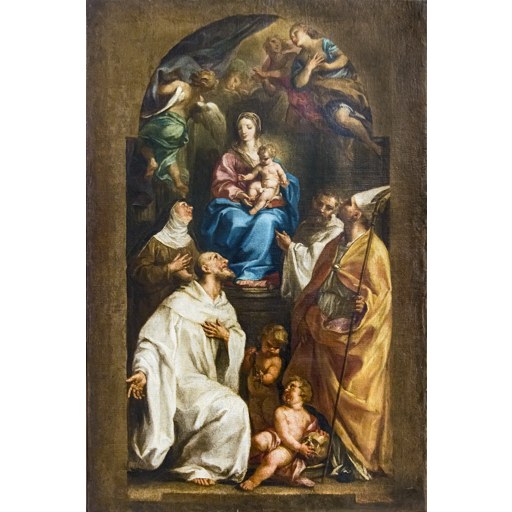
Didier Descouens
License: CC BY-SA 4.0
Rodolfo Gabrielli
Saint- Life Span
- 1034 - 1064 (age 30)
- Feast Day
- 17 October
- Gender
- male
- Church
- Catholic
Places
Roles & Family
Religious Information
Biography
Rodolfo Gabrielli, known in Latin as Rudolphus and in Italian as Rodolfo di Gubbio, belonged to the noble Gabrielli family of Gubbio, a hill town in Umbria in central Italy. Later tradition places his birth in Gubbio in 1034. Little contemporary documentation survives of his childhood, beyond the status of his house and the religious climate of eleventh-century Umbria, a region then marked by monastic revival and by the wider movement of church reform. From an early age he is said to have been drawn to the consecrated life rather than to a secular career among the local nobility.
He entered the Benedictine monastery of Santa Croce di Fonte Avellana in the Apennines between Gubbio and the Adriatic. In the mid-eleventh century Fonte Avellana was a leading centre of austere Benedictine eremitical life. Saint Peter Damian, later cardinal bishop of Ostia and a principal theorist of papal reform, was prior there. Under that influence Rodolfo followed a strict reading of the Rule of Saint Benedict, combining the Divine Office with solitude, fasting, and manual work. The house formed several men who later became bishops aligned with the reform party. Rodolfo’s monastic profession and the discipline of Fonte Avellana are the basis for treating him as a celibate religious with no recorded spouse or children.
In 1059, during the pontificate of Pope Nicholas II, Rodolfo was appointed bishop of Gubbio. The choice of a monk of Fonte Avellana for the local see fitted the reforming policy of placing trusted, unmarried, and pastorally serious men in Italian dioceses. As bishop he is remembered in hagiographical tradition for charity toward the poor, simplicity of life, and care in preaching and the sacraments. Accounts emphasize that he did not abandon monastic austerity after consecration. His episcopate lasted only a few years, in the period when the Gregorian reform was taking shape in the Italian church.
He died on 17 October 1064 in Gubbio, still a relatively young man. A local cult developed around his memory among the clergy and people of the diocese. He is commemorated as Blessed Rudolph of Gubbio on 17 October and appears in later martyrologies under that title. He was not the subject of a modern canonical process of beatification or canonization of the kind later regulated in Rome; his cult belongs to the older pattern of local episcopal and popular veneration. Surviving evidence does not assign him a wide list of specific patronages distinct from his association with Gubbio and with the Benedictine family, nor does it record a securely identified burial monument beyond the tradition of burial in his see city.