Roman Priest Landoald is a saint of the Catholic Church. Roman Priest Landoald's feast day is celebrated on 19 March.
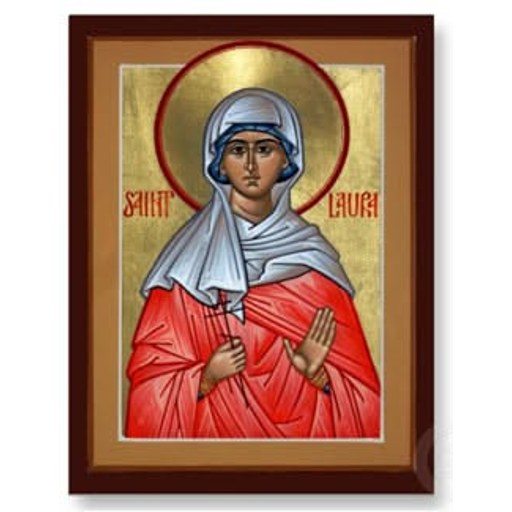
https://pinterest.com/gross4501/catholic-icons
License: unknown
Roman Priest Landoald
Saint- Feast Day
- 19 March
- Gender
- male
- Church
- Catholic
Places
Roles & Family
Biography
Landoald was a priest of the Roman church who, according to a hagiographical tradition first written down in the late tenth century, was sent from Rome in the mid-seventh century to take part in the evangelization of the Meuse region in the Low Countries. The principal narrative source is the Vita Landoaldi, composed about 980 by Heriger of Lobbes for the monks of Saint Bavo’s Abbey in Ghent at the time of a relic translation. That account states that Pope Saint Martin I dispatched Landoald, together with the deacon Amantius and a servant named Adrian, to Bishop Amandus of Maastricht. No seventh-century charter or chronicle names Landoald, so the outline of his life depends on this later monastic vita and on the liturgical cult that it supported.
Tradition places his pastoral work in Toxandria, in the Hesbaye (Hasbengouw), in what is now the Belgian province of Limburg. Amandus is said to have assigned him the village of Wintershoven, where Landoald built a church in honor of Saint Peter and made it the center of his ministry. From there he is described as preaching, baptizing, and serving a population that was still only partly converted from pagan practice. Amantius assisted him as deacon. Their servant Adrian, according to the same tradition, was murdered by robbers and was thereafter honored as a martyr. Miracle stories attached to Landoald in the tenth-century texts belong to the genre of translation-era hagiography rather than to contemporaneous report.
Landoald and Amantius are said to have died at Wintershoven and to have been buried at the church they had served. No contemporary obituary gives a year of death. Later compilations sometimes place his death in the 660s by inference from the dates of Martin I and of Amandus, but that figure is not independently documented. A local cult continued at Wintershoven. In 980 Abbot Womar of Saint Bavo’s in Ghent, acting with Bishop Notger of Liège, translated the relics of Landoald, Amantius, and Adrian to Ghent. Heriger’s vita and related miracle collections were written to authenticate those relics and to establish the saints’ feast in the abbey’s calendar.
Landoald is entered in the Roman Martyrology on 19 March, together with Amantius, as a Roman priest sent by Pope Martin to preach the Gospel in that region. He is not recorded as a member of a later religious order, nor as a bishop, pope, or patriarch. His veneration has remained essentially regional, tied to Wintershoven and to Ghent. Specialized patronages of trades, illnesses, or nations are not securely attested in the historical record. He belongs to the group of seventh-century Roman and Frankish clergy associated with the missionary organization of the diocese of Tongeren-Maastricht, known to us almost entirely through tenth-century hagiography.