Rosa Elena Cornejo Pazmiño is a venerable of the Catholic Church (1874 - 1964).
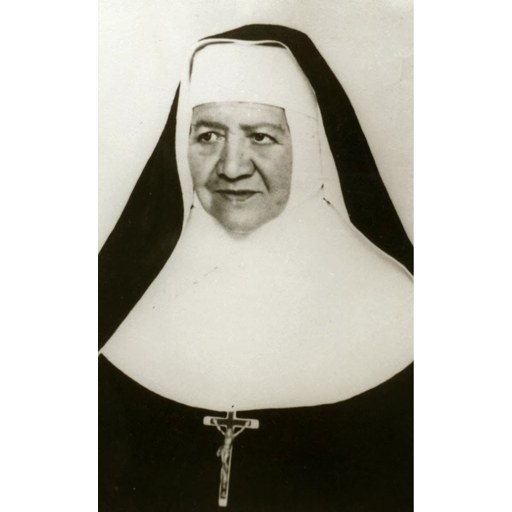
AnonymousUnknown author
License: Public domain
Rosa Elena Cornejo Pazmiño
Venerable- Life Span
- 1874 - 1964 (age 90)
- Gender
- female
- Church
- Catholic
Places
Roles & Family
Religious Information
Biography
Rosa Elena Cornejo Pazmiño was an Ecuadorian Catholic religious sister and foundress of a Franciscan congregation of women. She was born in Quito, the capital of Ecuador, on 18 December 1874, into a Catholic society still shaped by the strong clerical culture of the nineteenth-century republic. Ecuador in her childhood remained predominantly rural and devout, even as liberal governments after the 1890s challenged the public role of the Church, secularized education, and restricted some religious orders. In that setting, a vocation to consecrated life among women often meant combining contemplative piety with concrete works of teaching and charity. Cornejo Pazmiño discerned such a vocation and embraced Franciscan spirituality, with its emphasis on evangelical poverty, minority, and devotion to the Virgin Mary under the title of the Immaculate Conception.
In the early twentieth century she founded the Hermanas Franciscanas Misioneras de la Inmaculada, a congregation of sisters dedicated to missionary work, Christian education, and service to the poor and the sick. The foundation, associated with Quito around the mid-1910s, belonged to a wider Latin American pattern in which local foundresses established institutes that were Franciscan in inspiration yet adapted to national needs. Rather than relying solely on European congregations, Ecuadorian and other South American women created houses that could recruit locally and work in parishes, schools, and missions in the sierra and on the margins of the cities. Under Cornejo Pazmiño the sisters were formed in a life of prayer, community, and apostolic labor. The Immaculate Conception provided the Marian identity of the institute, while the Franciscan tradition supplied its evangelical tone. Over subsequent decades the congregation developed its works in Ecuador, contributing to the education of girls and to pastoral assistance at a time when state schooling was uneven and many families remained poor.
Cornejo Pazmiño governed and formed her community through a long religious life that stretched across much of the twentieth century. She witnessed continuing tensions between the Ecuadorian state and the Catholic Church, the gradual restoration of a more stable legal framework for religious institutes, and the mid-century currents that would culminate in the Second Vatican Council near the end of her life. She died on 24 August 1964, in her ninetieth year. Readily accessible international documentation about her interior life, her writings, or a formal cause of canonization is limited. She does not appear among the canonized saints or beatified blesseds of Ecuador, whose better-known figures include Mariana de Jesús de Paredes, Narcisa de Jesús, Miguel Febres Cordero, and Mercedes de Jesús Molina. She is therefore best understood as a locally significant foundress rather than as a universally culted saint.
Her legacy is the religious family she left behind and the ordinary continuity of Franciscan missionary sisterhood in Ecuador. In the history of Latin American Catholicism she represents the numerous women who, without wide fame, organized consecrated life, educated the young, and served the sick in the first half of the twentieth century. Accounts of her treat her as a model of perseverance in foundation and of fidelity to a Marian and Franciscan charism. Precise details of her family background, the canonical dates of diocesan and pontifical approval of her institute, and her place of burial are not uniformly recorded in the most accessible historical summaries and should be sought in Ecuadorian archival and congregational sources.