Roseline de Villeneuve is a saint of the Catholic Church (1263 - 1329). Roseline de Villeneuve's feast day is celebrated on 17 January.
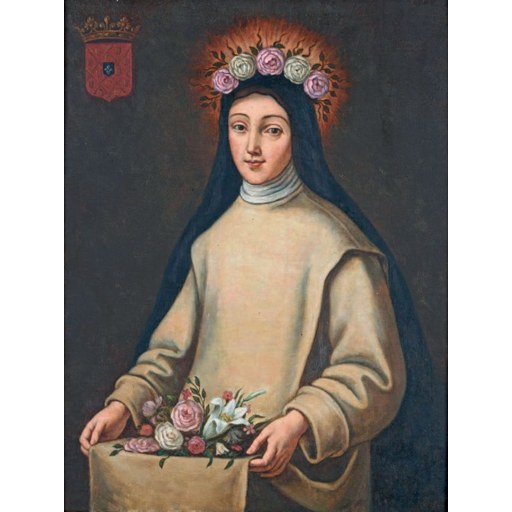
École française
License: Public domain
Roseline de Villeneuve
Saint- Life Span
- 1263 - 1329 (age 66)
- Feast Day
- 17 January
- Gender
- female
- Church
- Catholic
Places
Relics & Where to Venerate
Location unknown
The bodily remains of Roseline de Villeneuve are a first-class relic. Venerated at Les Arcs.
Roles & Family
Religious Information
Canonization
Biography
Roseline de Villeneuve was a Carthusian nun of medieval Provence, later venerated in the Catholic Church as Sainte Roseline. She was born in 1263 at the château of Les Arcs (today Les Arcs-sur-Argens) in the County of Provence, into the noble house of Villeneuve, lords of that place. A close kinsman, Hélion de Villeneuve, later became Grand Master of the Knights Hospitaller. Later tradition presents her childhood as one of marked piety and secret almsgiving from the family stores. The best-known episode, a Provençal legend of a type also told of other charitable saints, relates that when she was confronted while carrying bread for the poor, the loaves appeared as roses.
Seeking enclosure, she entered the female charterhouse of Notre-Dame de la Celle-Roubaud, a Carthusian nunnery near the family estates. Carthusian nuns followed a severe mixed rule of cell solitude, silence, and liturgical prayer. Roseline was in time chosen prioress and is remembered in the order’s and local tradition for austerity, governance of the house, and care of the needy who came to the monastery. Miracle stories of multiplied food, healings, and supernatural knowledge grew up around her; these rest mainly on later pious narrative rather than on strictly contemporary administrative records, though her existence as a Villeneuve noblewoman and Carthusian prioress is not in doubt.
She died at Celle-Roubaud on 17 January 1329. Her body was reported incorrupt, and particular devotion attached to her eyes, which were said to have remained open and strikingly preserved. A local cult developed at the tomb in Provence. In the nineteenth century Pope Pius IX confirmed this longstanding cult (equipollent beatification), authorizing public veneration; she was not the subject of a separate modern papal canonization ceremony, though she is popularly called a saint in France. Her relics are kept in a glass shrine in the Chapelle Sainte-Roseline on the former monastic site, now part of the Château Sainte-Roseline estate near Les Arcs-sur-Argens, which remains a place of pilgrimage, especially around her feast on 17 January.
Devotion to Roseline has stayed chiefly regional, bound to Provence and to the Carthusian past of Celle-Roubaud. The surrounding domaine is known today for its vineyards, while the chapel preserves the memory of the medieval nunnery and the displayed relics. Independent thirteenth- and fourteenth-century documentation of her inner life is thin, and many miracle tales cannot be verified outside hagiography; what is securely established is her family setting, her Carthusian profession and priorate, her death in 1329, and the continuity of her cult from the later Middle Ages through the papal confirmation of the nineteenth century.