Rufinus of Assisi is a saint of the Catholic Church. Rufinus of Assisi's feast day is celebrated on 11 August. Rufinus of Assisi is the patron saint of Assisi.
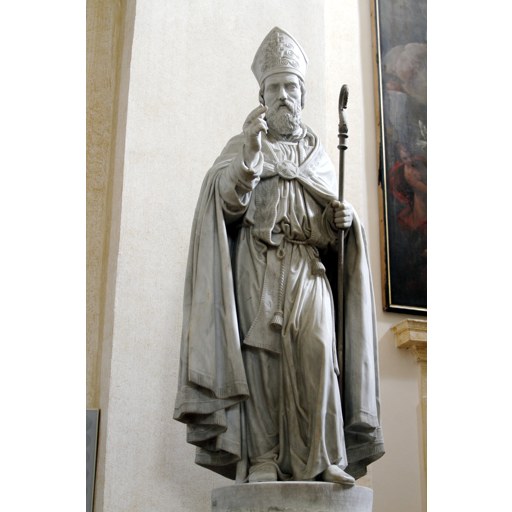
José Luiz
License: CC BY-SA 4.0
Rufinus of Assisi
Saint- Feast Day
- 11 August
- Gender
- male
- Church
- Catholic
Places
Sacred Place

Roles & Family
Patronage
Assisi
Biography
Rufinus of Assisi, known in Italian as San Rufino, is venerated as a third-century Christian martyr and as the first bishop of Assisi in Umbria. Almost nothing about his life can be established from contemporary historical documents. The principal narrative of his career and death is a later Passio, which modern hagiographers treat as largely legendary, though it preserves the outline of a cult that was already firmly rooted in Assisi by the early Middle Ages. In the Roman Martyrology he is commemorated as bishop and martyr at Assisi. He remains the principal patron of the city, whose cathedral still bears his name and houses relics long associated with him.
According to the traditional account, Rufinus came from the East—sometimes specified as Syria or Asia Minor—and preached the Christian faith in Umbria. He is said to have converted many inhabitants of the Assisi region and to have been chosen as the community’s first bishop. No independent episcopal list or third-century source confirms this, and the details of his origin and missionary work cannot be verified. What can be said with more confidence is that Assisi’s church later remembered him as its proto-bishop and that this memory shaped the city’s religious identity for centuries, including the period in which Francis and Clare of Assisi were baptized in the cathedral dedicated to him.
The same legendary Passio describes his martyrdom during a Roman persecution, often placed in the mid-third century and sometimes associated with the reign of Maximinus Thrax. After arrest and torture, Rufinus is said to have been condemned to death by drowning. Tradition holds that he was thrown into the river Chiascio near Costano, a locality close to Assisi, with a millstone or heavy stone fastened about his neck. His body was later recovered from the water and given burial. Subsequent translations brought the relics into Assisi itself. The iconography of the saint frequently shows him as a bishop with a millstone, alluding to this drowning.
The present Cathedral of San Rufino, a Romanesque building whose façade dates from the twelfth and thirteenth centuries and which was consecrated in 1253, stands over earlier churches on the site of his shrine. The crypt contains a Roman sarcophagus traditionally identified as his tomb, and the relics of Rufinus are venerated there. His feast is kept on 11 August, and Assisi continues to honor him as civic patron. Because the historical record is so thin, a cautious account must distinguish the well-attested medieval and modern cult—centered on Assisi, its cathedral, and the patronage of the city—from the uncorroborated biographical particulars of the Passio. Within those limits, Rufinus occupies a central place in the sacred history of Assisi as its first bishop, martyr, and patron.