Rufus and Carpophorus is a saint of the Catholic Church. Rufus and Carpophorus's feast day is celebrated on 27 August.
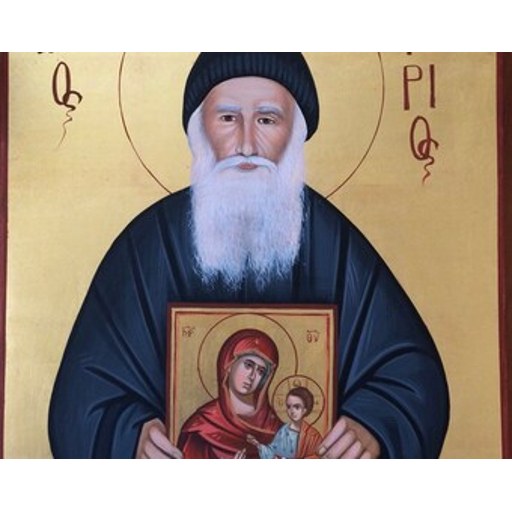
https://www.etsy.com/listing/727916552/hand-painted-byzantine-icon-of-saint
License: unknown
Rufus and Carpophorus
Saint- Feast Day
- 27 August
- Gender
- male
- Church
- Catholic
Places
Roles & Family
Biography
Saints Rufus and Carpophorus, the latter also known in the sources as Carponius or Caponius, were Christian martyrs of Capua in Campania. They belong to the large company of early witnesses whose names were preserved in the liturgical books of the Western Church but whose lives were not recorded in any surviving contemporary narrative. Tradition places their death at Capua in the later third century, in the era associated with the persecutions of the emperor Diocletian. An approximate date around 295 is often repeated in later calendars and popular notices, yet it is not confirmed by an inscription, an imperial rescript, or an authentic passio. Capua itself was one of the principal cities of Campania, with a Christian community already of some antiquity by that period, and it is historically plausible that martyrs were made there; the details of their trial and execution, however, have been lost.
The cult of the two saints is attested in the Hieronymian Martyrology, which assigns them to Capua. In the late sixth century Pope Gregory the Great, writing of Campanian churches and holy places, mentioned a church at Capua dedicated to Saint Rufus. That reference shows that by Gregory's day Rufus was a recognized local patron with a public cult, whether or not Carpophorus was commemorated in the same building. Medieval martyrologists, including Bede, Florus of Lyon, Ado of Vienne, and Usuard, carried the pair forward in their compilations. In some of these notices Rufus is styled bishop of Capua and Carpophorus his companion in martyrdom; in others both are simply called martyrs. Historians of the martyrologies treat the episcopal title with caution, because such designations were frequently added in later recensions without independent evidence.
Little else can be said of their personal circumstances. No reliable source records their place of birth, parentage, occupation, or family life. They lived before the age of the great Western religious orders, and there is no indication that they were monks. Confusion with other early Christians named Rufus has sometimes arisen in popular writing, since the name appears in the New Testament and was borne by several martyrs and bishops; the Capuan pair commemorated on 27 August is nonetheless kept distinct in the standard martyrological tradition from figures such as Rufus of Rome. Their relics and the church dedication at Capua formed the center of their veneration. They were never the subject of a formal papal canonization of the kind that developed in the Middle Ages; like most saints of the first centuries, they entered the calendar through ancient local cult and the authority of the martyrologies.
The Roman Martyrology continues to name them on 27 August, recalling Capua in Campania as the place of their martyrdom. Beyond that liturgical commemoration and the early medieval notices, the historical record is silent. Their story therefore illustrates both the tenacity of local memory in an important Italian church and the severe limits of what can be known about many of the ancient martyrs once their original Acts have perished.