Saba is a saint of the Catholic Church.
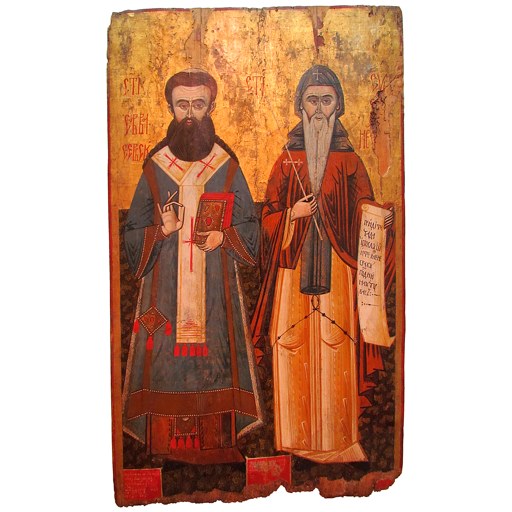
https://en.wikipedia.org/wiki/Saint_Sava
License: unknown
Saba
Saint- Church
- Catholic
Biography
The name Saba (also written Sabas, Sabbas, or Sava, according to language and liturgical tradition) is shared by several distinct figures in Christian hagiography. No Wikidata identifier, feast date, see, or other disambiguating detail was supplied with this subject, so a single biography cannot be verified. Assigning a birth year, death year, city, office, or patronage would risk conflating different persons. In Greek sources the usual form is Sabbas; in Church Slavonic and Serbian, Sava; in Georgian and some Eastern European usage, Saba. The following summary therefore distinguishes the principal saints of this name as they appear in standard historical and hagiographical sources, without treating any one of them as confirmed for this record.
The most widely commemorated monastic saint of the name is Sabbas the Sanctified, a leading figure of Palestinian desert monasticism in the late fifth and early sixth centuries. The principal source is the Life composed in the sixth century by Cyril of Scythopolis. That Life places his birth in 439 at Mutalaska in Cappadocia, records that he entered a monastery as a child, and describes his later settlement in the Judean wilderness as a disciple of Euthymius the Great. In the 480s he founded the Great Lavra east of Bethlehem, thereafter known as Mar Saba, which became a major center of Byzantine and later Orthodox monastic life and of liturgical practice associated with the so-called Typikon of St. Sabbas. He died at the lavra in 532 and is commemorated on 5 December in the Byzantine calendar. He lived as a monk and priest-abbot, not as pope or patriarch of an ancient see. Relics have been associated with Mar Saba and, in later centuries, with Venice; later Western and Eastern calendars treat him as a saint by ancient cult rather than by a named modern canonization.
A second major figure is Sava of Serbia (born Rastko Nemanjić), son of the Serbian ruler Stefan Nemanja, born in the 1170s in the Serbian lands. After a monastic formation on Mount Athos, where he was instrumental in the establishment of Hilandar, he obtained recognition of an autocephalous Serbian Church and became its first archbishop in 1219. He died at Tarnovo in Bulgaria in 1236. His relics were later translated to Serbia and, according to later Serbian tradition, publicly burned by Ottoman authorities at Vračar in Belgrade in 1594. He is the national patron of Serbia and is closely associated with Serbian education and church organization. He was an archbishop of a newly autocephalous church, not Bishop of Rome, not Coptic Pope of Alexandria, and not patriarch of one of the ancient Orthodox or Oriental sees. His principal feast is 14 January on the Julian calendar (27 January on the corresponding civil date used by many Orthodox churches).
Other historical persons of the name include the Gothic martyr Sabbas, drowned in a river north of the Danube (in the region of the later Romanian lands) in 372 during a persecution of Christians among the Tervingian Goths; his passion is among the better-documented fourth-century martyr narratives from that area and is commemorated in the spring (commonly 12 or 15 April, depending on the calendar). Later Georgian, Romanian, and Slavic synaxaria also list monks and bishops named Saba or Sava. Because these lives, dates, burial places, and patronages do not coincide, none of the schematic biographical fields can be filled for an undifferentiated subject called only “Saba.” Identification would require a feast day, a place of cult such as Mar Saba or Serbia, a century, or an equivalent identifier.