Sabbas of Storozhev is a saint of the Catholic Church (d. 1406). Sabbas of Storozhev's feast day is celebrated on 3 December (repose); 19 January (uncovering of relics); 23 August (second uncovering of relics). Sabbas of Storozhev is the patron saint of Zvenigorod.
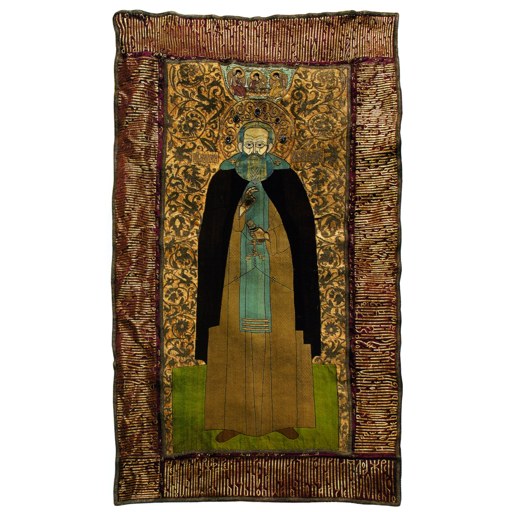
Unknown authorUnknown author
License: CC BY-SA 4.0
Sabbas of Storozhev
Saint- Life Span
- d. 1406
- Feast Day
- 3 December (repose); 19 January (uncovering of relics); 23 August (second uncovering of relics)
- Gender
- male
- Church
- Catholic
Places
Roles & Family
Patronage
Zvenigorod
Canonization
Biography
Saint Sabbas of Storozhev, known in Russian as Savva Storozhevsky and also called Sabbas of Zvenigorod, was an Eastern Orthodox monk, hegumen, and monastic founder active in Muscovite Rus' in the late fourteenth and early fifteenth centuries. He belongs to the circle of disciples of Saint Sergius of Radonezh. Reliable sources do not preserve a documented year or place of birth, nor a detailed account of his family; later hagiography presents him as a man who took the monastic habit at Sergius’s Trinity Monastery and was trained there in liturgical prayer, manual labor, and the mixed eremitic-cenobitic discipline that Sergius had established in the forests north of Moscow. In that community he was ordained and became known as a spiritual father. After the death of Sergius in 1392, leadership of the Trinity house passed principally to Saint Nikon of Radonezh; tradition nonetheless remembers Sabbas as one of the senior priest-monks of the first generation and, in some accounts, as having briefly borne abbatial responsibility during a period of Nikon’s absence.
In the last years of the fourteenth century Prince Yuri Dmitrievich, appanage prince of Zvenigorod and a godson of Saint Sergius, asked Sabbas to leave the Trinity Monastery and to plant a new house in the Zvenigorod principality. Sabbas settled on Mount Storozhi, a wooded ridge above the Moscow River just west of the town of Zvenigorod, and founded a monastery dedicated to the Nativity of the Mother of God. The community, later called the Savvino-Storozhevsky Monastery, began with a wooden church and a small brotherhood living under the hegumen’s direction. Sabbas organized the common life, received disciples, and established the house as the chief spiritual center of the Zvenigorod lands. He remained a monk-abbot rather than a bishop and never occupied a patriarchal or episcopal see. Surviving tradition emphasizes his personal austerity and his role as an elder rather than as a political actor, although the monastery’s location on a watch height and its princely patronage gave it regional importance.
According to the liturgical tradition of the Russian Orthodox Church, Sabbas died at his monastery on 3 December 1406 (some historical notices give 1407) and was buried in the monastery church. Local veneration of his tomb began in the fifteenth century. In the mid-sixteenth century, during the program associated with Metropolitan Macarius of Moscow to enter native Russian saints into the general calendar, Sabbas received church-wide recognition. His relics were solemnly uncovered in 1652, in the reign of Tsar Alexis Mikhailovich, who was a notable patron of the monastery; that uncovering is commemorated on 19 January. A further festive return of the relics, after their removal in the Soviet period, is kept on 23 August. The principal feast remains 3 December, the day of his repose.
From the seventeenth century the Savvino-Storozhevsky Monastery enjoyed close ties to the Muscovite and Romanov court, receiving stone churches and royal visits. Popular and court tradition credited Sabbas with miraculous protection of the tsar and of the Moscow region, which strengthened his reputation as heavenly protector of Zvenigorod. After the Russian Revolution the monastery was closed and the relics were taken into state museum collections; monastic life was restored in the 1990s and the relics were returned in 1998. Sabbas is remembered as one of the monastic founders who carried the Sergian pattern of organized communal life from the Trinity house into the surrounding principalities, and as the patron saint of Zvenigorod and of the monastery that still bears his name.