Saint Anna Rybinskaya is a saint of the Eastern Orthodox Church.
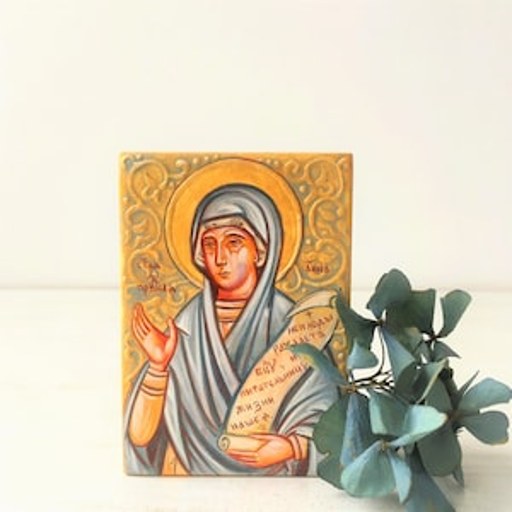
https://etsy.com/market/st._anna_painting
License: unknown
Saint Anna Rybinskaya
Saint- Gender
- female
- Church
- Eastern Orthodox
Places
Roles & Family
Biography
Saint Anna Rybinskaya is a figure associated with Orthodox Christian veneration in Russia, linked by her epithet to the city of Rybinsk on the Volga River in what is now Yaroslavl Oblast. Unlike widely commemorated saints whose lives appear in the major menologia, synaxaria, and scholarly dictionaries of saints, a fully documented biography of Anna Rybinskaya with independently corroborated dates and family details is not found in the standard historical and hagiographical references available for verification. The title of saint and the toponymic epithet are consistent with Russian Orthodox practice of locally glorifying pious women—whether lay righteous ones, monastics, or confessors—whose memory was kept in a particular town or diocese.
In the Russian tradition, especially from the late imperial period through the Soviet era and the subsequent revival of church life, many such figures were remembered for asceticism, charity, spiritual counsel, or endurance of persecution. Rybinsk itself was an important commercial and later industrial center, with a number of churches and a history of both flourishing parish life and later repression. A locally venerated Anna connected with that city might have been a parishioner, a monastic of a nearby convent, or one of the many women later numbered among the New Martyrs and Confessors. None of these possibilities can be confirmed without primary sources such as diocesan acta, contemporary memoirs, or the official documents of glorification issued by a synod or local bishop.
Because precise facts are lacking, it is not possible to state her year of birth or death, her place of birth, whether she was married or had children, or whether she belonged to a religious order. She was not a pope or a patriarch. Any feast day, patronage, or the name of the hierarch who glorified her would belong to local liturgical calendars or archival records that have not been corroborated here. Burial would presumably have been in or near Rybinsk if that was the place of her repose, but even that remains an inference rather than a documented fact.
This account therefore limits itself to identifying the subject as a female saint of the Russian Orthodox cultural sphere connected with Rybinsk and to explaining the limits of what can be verified. Further research would require consultation of the Yaroslavl eparchy archives, published lives of locally venerated saints of the Upper Volga region, and catalogs of Russian saints compiled in the twentieth and twenty-first centuries.