Saint Aurea of Paris is a saint of the Catholic Church (d. 666). Saint Aurea of Paris's feast day is celebrated on 4 October.
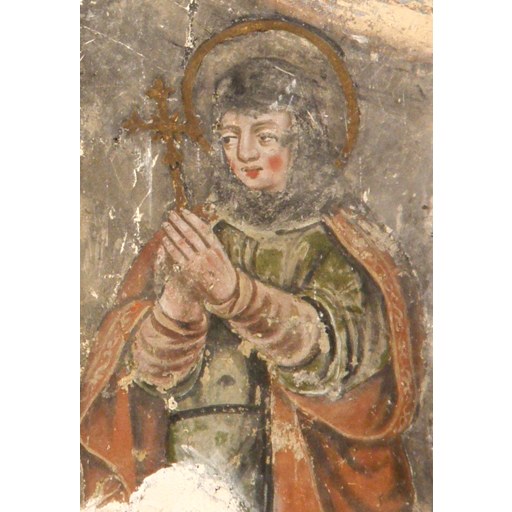
François Bellin
License: CC BY-SA 3.0
Saint Aurea of Paris
Saint- Life Span
- d. 666
- Feast Day
- 4 October
- Gender
- female
- Church
- Catholic
Places
Roles & Family
Biography
Saint Aurea of Paris, also known in French as Sainte Aure or Aura, was a Merovingian-era abbess whose death is placed at Paris in 666. Almost nothing about her childhood, family, or year of birth can be established from contemporary records. Later hagiographical tradition, repeated in early modern collections of saints’ lives, describes her as a native of Syria who came to Gaul and embraced the monastic life. That origin story cannot be confirmed independently and belongs to the legendary layer that often accrued to early medieval holy women. What can be said with more confidence is that her memory was firmly localized in Paris and tied to a convent dedicated to Saint Martial of Limoges.
The principal historical frame for her career is the monastic patronage of Saint Eligius (Éloi), the Aquitanian goldsmith who served the Frankish royal court and later became bishop of Noyon. Eligius is credited with founding, in Paris, a community of nuns under the patronage of Saint Martial, situated in the settlement associated with Saint-Paul. Tradition names Aurea as the first abbess of this house. In that role she would have been responsible for the spiritual and material governance of a women’s monastery in the capital of Neustria, at a time when Columbanian and other monastic observances were spreading through Frankish Gaul and when bishops and court figures frequently endowed urban and suburban nunneries. No early, independent vita of Aurea survives to describe her rule in detail; notices of her depend on martyrological entries and on the wider dossier of Eligius, whose own life was written by Saint Audoin of Rouen.
According to the received account, Aurea died in 666 during an epidemic of plague, together with a large number of her nuns—later writers give the figure of one hundred and sixty. The year 666 is the date assigned by standard martyrologies and by most modern summaries; it cannot be verified from a strictly contemporary chronicle entry devoted to her alone, but it has been stable in the tradition. She is honored as a virgin and abbess. Burial was associated with her monastery’s church in Paris. In subsequent centuries relics attributed to her were kept and translated within the city, and a church of Sainte-Aure formed part of Parisian sacred topography, attesting to a continuing local cult.
Liturgical commemoration of Saint Aurea is fixed on 4 October in the Roman Martyrology, which records at Paris the death of the virgin and abbess. She was never the object of a formal papal canonization of the later medieval or modern type; her cult belongs to the era of local episcopal and popular recognition later accepted by the wider Latin Church. She is not among the principal patron saints of Paris, and no extensive list of specialized patronages is attached to her name in the standard directories. For the historian, Aurea remains an obscure but authentic witness to seventh-century female monasticism in the Île-de-France: a named abbess whose community was linked to one of the great courtier-bishops of the Merovingian age, remembered above all for a holy death in time of pestilence and for a feast that Paris continued to keep.