Saint Beatrice d'Este is a saint of the Catholic Church (1192 - 1226). Saint Beatrice d'Este's feast day is celebrated on 10 May.
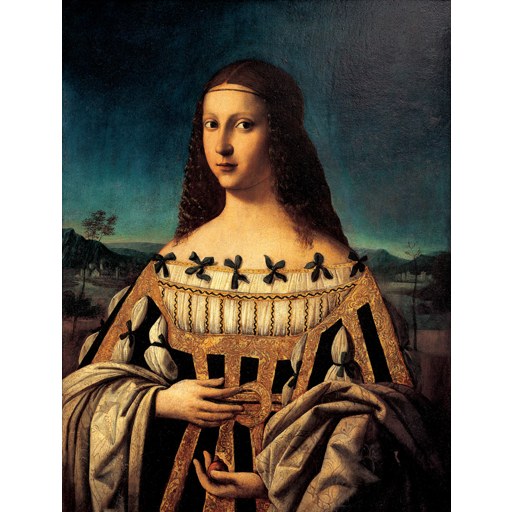
Bartolomeo Veneto
License: Public domain
Saint Beatrice d'Este
Saint- Life Span
- 1192 - 1226 (age 34)
- Feast Day
- 10 May
- Gender
- female
- Church
- Catholic
Places
Roles & Family
Religious Information
Biography
Saint Beatrice d'Este was a thirteenth-century Benedictine nun and abbess belonging to the House of Este, one of the principal noble dynasties of northern Italy. She was born in 1192 at the family castle of Este, in the territory of present-day Veneto. Her father was Azzo VI d'Este, marquis of Este, a leading Guelph magnate who served as podestà in several Lombard and Venetian cities and who died in 1212. The identity of her mother is not established with certainty in surviving sources; later genealogies variously connect her with the Aldobrandeschi or with the houses of Savoy or Châtillon. Beatrice grew up amid the Guelph–Ghibelline conflicts that shaped the Italian communes in the early 1200s. Among her siblings was Azzo VII, known as Azzo Novello, who later consolidated Este authority in Ferrara.
After her father's death she remained under family protection. In keeping with the marriage politics of a great feudal house she was betrothed to a nobleman, but the projected marriage never took place; hagiographical tradition holds that her intended husband died before the wedding. Rather than enter another alliance she chose the monastic life. With the consent of her brother Azzo VII, and together with a small group of companions of similar rank, she withdrew around 1221 to an isolated site at Gemmola (Monte Gemola) in the Euganean Hills, in the countryside of Baone near Padua. There the women occupied or restored a church dedicated to Saint John the Baptist and formed a community living under the Rule of Saint Benedict. Beatrice became abbess of this house.
The community at Gemmola was remembered in later legend for austerity, prayer, and charity. Beatrice's time as abbess lasted only a few years. She died at the monastery on 10 May 1226 and was buried there. A local cult formed around her tomb; later accounts claimed that her body remained incorrupt and that miracles occurred at the grave. The monastery did not survive indefinitely. In subsequent centuries, amid the wars and changing religious landscape of the Veneto, the house declined and was abandoned, and her relics were translated from the original site.
Beatrice is commemorated on 10 May. She should not be confused with her niece, Blessed Beatrice II d'Este (died 1262), daughter of Azzo VII, who founded the Benedictine monastery of Sant'Antonio in Polesine at Ferrara. The elder Beatrice's cult remained essentially regional, associated with Este, Padua, and the Euganean Hills. She was never the subject of a formal papal canonization of the later centralized type; her sanctity rests on medieval popular veneration and local episcopal recognition, as was typical of many Italian saints of the thirteenth century. Surviving evidence for her life is limited and is filtered through hagiography written well after her death, so many personal details remain uncertain.