Saint Benjamin the Deacon and Martyr is a saint of the Catholic Church (d. 424). Saint Benjamin the Deacon and Martyr's feast day is celebrated on 31 March (Catholic); 13 October (Eastern Orthodox).
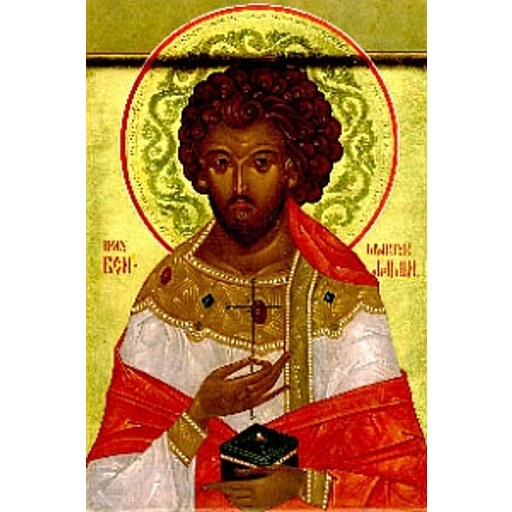
Unknown authorUnknown author
License: Public domain
Saint Benjamin the Deacon and Martyr
Saint- Life Span
- d. 424
- Feast Day
- 31 March (Catholic); 13 October (Eastern Orthodox)
- Gender
- male
- Church
- Catholic
Places
Roles & Family
Biography
Saint Benjamin was a deacon of the Christian Church in the Sasanian (Persian) Empire in the early fifth century. Almost nothing can be verified about his origins: no reliable source records his year of birth, his native city, his family, or whether he was married. He enters history only as a preacher and prisoner during the great persecution of Persian Christians that followed a stretch of relative imperial tolerance. Christianity had long been established in Mesopotamia and Iran, but Persian believers were often treated as politically suspect whenever the Sasanian state was at war with the Christian Roman (Byzantine) Empire, and the Zoroastrian Magian establishment pressed for measures against them.
After the death of Yazdegerd I in 421, his son Bahram V (Varanes) intensified the campaign. Benjamin was arrested for proclaiming the Christian faith and was held in prison for about a year (Theodoret of Cyrrhus, the principal literary witness, also allows a reading of two years). His release was obtained by an ambassador of the Eastern Roman emperor Theodosius II. The Persian king agreed to free the deacon only on condition that he cease speaking of his religion to the Magians and the people. Benjamin regarded that silence as a betrayal of the deacon’s duty to preach the Gospel. He is said to have answered that he could not hide the light of Christ, and he resumed evangelizing as soon as he was at liberty.
He was recaptured after continuing his ministry. The torture inflicted on him is described in grim and consistent terms by the ancient accounts. Reeds were forced under his fingernails and toenails and into other tender parts of his body, then withdrawn and the process repeated. A knotted or thorny stake was driven into his bowels, tearing him internally. He died in that agony. Conventional dating places the martyrdom in or about 424. The Roman Martyrology commemorates him on 31 March (sometimes with a conventional and historically doubtful localization at Persepolis); Eastern Orthodox calendars keep his memory on 13 October. He was never a bishop, patriarch, or pope, and no monastic religious order is attached to his name.
Veneration of Benjamin belongs to the ancient, pre-congregational layer of Christian sanctity: there was no later papal process of beatification or canonization in the medieval sense. The chief narrative source remains Theodoret’s Ecclesiastical History, which sets Benjamin among other Persian martyrs of the same persecution. No trustworthy evidence survives for a burial place, a cultic patronage of particular places or causes, or any domestic biography beyond his diaconate and death. He is remembered as a witness who chose continued preaching over a life purchased by silence.