Saint Marcella is a saint of the Catholic Church (d. 410). Saint Marcella's feast day is celebrated on January 31.
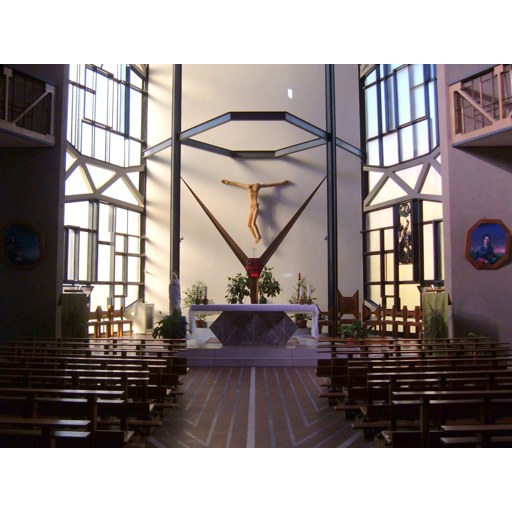
Croberto68
License: CC BY-SA 3.0
Saint Marcella
Saint- Life Span
- d. 410
- Feast Day
- January 31
- Gender
- female
- Church
- Catholic
Places
Roles & Family
Biography
Saint Marcella was a Christian noblewoman of Rome in the fourth and early fifth centuries, remembered as a pioneer of female ascetic life in the Western Church and as a disciple and correspondent of Saint Jerome. She was born in Rome to a family of senatorial rank. Her mother, Albina, was a Christian of distinguished lineage. In her youth Marcella heard reports of the monks of Egypt and of figures such as Anthony, brought to Rome by Alexandrian clergy during the sojourns of Athanasius of Alexandria and later Peter of Alexandria. These accounts shaped her desire for prayer and renunciation. She married, but her husband died after only seven months. A man of consular rank named Cerealis then sought her hand and offered to make her his heir in preference to his own children. Marcella refused remarriage and chose consecrated widowhood. Jerome records that she preferred to remain united to Christ rather than take a second husband.
Thereafter she lived with a severity unusual among Roman aristocrats of her class. She laid aside silk and jewels, wore a simple brown dress, and gave herself to fasting, prayer, and the study of Scripture. Her house on the Aventine Hill became a gathering place for other women of rank who wished to live in the same way. Among those associated with this circle were Principia, who lived with her; Asella; Lea; and, for a time, Paula and Paula’s daughter Eustochium. The household is often described as the first community of Christian women in Rome living according to a monastic pattern, though it was a private aristocratic foundation rather than a later canonical religious order. Marcella distributed a large part of her wealth in alms.
When Jerome arrived in Rome in 382 at the invitation of Pope Damasus I, Marcella sought him as a teacher of the Bible. He later wrote that she never accepted an explanation that failed to satisfy her intelligence, and that she pressed him on Hebrew terms, difficult passages, and disagreements among commentators. After Jerome left Rome in 385, she remained a point of reference in the city on scriptural questions. Jerome claimed that inquirers came to her and that she answered them while modestly attributing her learning to him or to other teachers, so as not to appear to instruct men. In the controversies over Origen’s theology that divided Roman Christians around the turn of the fifth century, she supported Jerome against Rufinus of Aquileia and used her influence to oppose what she and Jerome regarded as Origenist error.
In 410, during the sack of Rome by the Goths under Alaric, soldiers broke into her house in search of gold. She had long since given away her treasure. Finding nothing of the wealth they expected, they beat her with clubs. Jerome, writing afterward to Principia, says that Marcella showed no concern for her own life but pleaded that Principia be spared from assault. The two women were taken to the Basilica of Saint Paul, which had been set aside as a sanctuary. Marcella died there a few days later from the effects of the beating, in the year 410. Jerome’s letter in her memory, composed about two years later, is the principal ancient source for her life.
Marcella has been venerated as a saint from late antiquity in both East and West. The Roman Martyrology commemorates her on 31 January and notes that Jerome wrote her praises. She was not the subject of a later formal papal canonization; her cult rests on ancient veneration and on Jerome’s testimony. She is remembered as a founder of women’s monastic life in Rome and as one of the most learned Christian women of the Latin Church in late antiquity.