Saint Methodius of Pochayiv is a venerable of the Catholic Church.
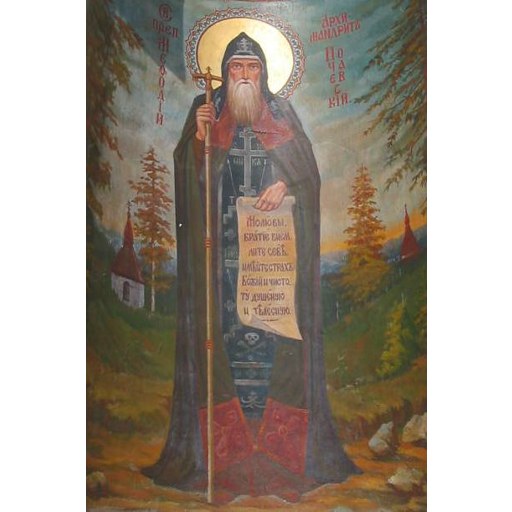
Roman Zacharij
License: Public domain
Saint Methodius of Pochayiv
Venerable- Gender
- male
- Church
- Catholic
Relics & Where to Venerate
Location unknown
The bodily remains of Saint Methodius of Pochayiv are a first-class relic. Venerated at Pochayiv Lavra.
Roles & Family
Biography
Saint Methodius of Pochayiv is a figure whose personal biography is not securely attested in the standard historical and hagiographical sources that can be verified here. The epithet “of Pochayiv” associates him with Pochayiv (also spelled Pochaiv or Pochaev), a town in historic Volhynia in what is now western Ukraine, and almost certainly with the monastic complex there, the Holy Dormition Pochayiv Lavra. That lavra has long been one of the principal Orthodox pilgrimage centres of the region, known especially for the Pochayiv Icon of the Mother of God and for a small number of well-documented monastic saints. Beyond the name and this geographical-monastic association, reliable particulars—a birth year, a death year, a place of origin, a connected vita, a feast day, or a patronage—do not emerge from the major synaxaria, menologia, or historical surveys in a form that can be confirmed without speculation.
The monastery at Pochayiv stands on a hill in Volhynia. Later tradition places the beginnings of monastic life there in the thirteenth century, when monks from Kyiv are said to have sought refuge during the Mongol invasions; more continuous documentary history of the house belongs to the early modern period. In the sixteenth and seventeenth centuries the community became a stronghold of Orthodox life in a confessionally contested borderland of the Polish–Lithuanian Commonwealth. From 1713 until 1831 the monastery was held by the Order of Saint Basil the Great within the Greek Catholic Church; it was then returned to the Orthodox Church and later raised to lavra status. Any monk or locally remembered ascetic called “of Pochayiv” would have lived inside this shifting institutional and confessional setting, but that context alone does not identify a particular Methodius or date his life.
The saints whose cult at Pochayiv is firmly established in Orthodox calendars bear other names and are documented independently. The most prominent is Saint Job of Pochayiv (born Ivan Zhelezo in the mid-sixteenth century and died in 1651), abbot and defender of Orthodoxy, whose relics remain a focus of pilgrimage. In the twentieth century the Church glorified Saint Amphilochius of Pochayiv (1894–1971), a monk and healer of the Soviet period. Standard lists of the lavra’s saints and of the saints of Volhynia do not, in sources that can be checked here, give a comparable dated life for a Methodius of Pochayiv. The name may refer to a locally commemorated monk, a schema-elder, or a figure known mainly in unpublished or parish-level tradition; it may also have been confused in secondary listings with better-known saints named Methodius (for example the ninth-century apostle of the Slavs, or various bishops and martyrs of that name) or with other Pochayiv ascetics. None of those possibilities can be confirmed from reliable published evidence.
In Eastern Christian practice, monks receive a new name at tonsure, often that of an earlier saint, and may later be remembered by that name together with the monastery where they struggled. Local veneration can precede, or remain independent of, formal synodal glorification, and many elders are called saint or venerable in popular devotion long before—or without—a fully written life. For that reason an obscure “Saint Methodius of Pochayiv” might represent genuine local memory. Historical caution, however, requires that dates of birth and death, family circumstances, office, burial, feast day, and patronage not be supplied when they cannot be traced to a trustworthy source. No evidence identifies this Methodius as Bishop of Rome, as Coptic Pope of Alexandria, or as patriarch or catholicos of an autocephalous see. Nothing verifiable establishes a spouse, children, or a Western-style religious order.
Because the subject remains obscure in accessible historical literature, claims about his century, his exact role at the lavra, or a specific liturgical commemoration would be conjectural. What can be said with confidence is only the broader setting: Pochayiv’s monastery shaped the religious landscape of Volhynia across Orthodox and Uniate periods, produced a small number of widely recognized saints, and has always numbered many unnamed or little-documented monks among its spiritual tradition. Any fuller biography of Methodius of Pochayiv would depend on primary monastic records, local synaxaria, or archival notices that have not been corroborated here.