Saint Tariec is a saint of the Catholic Church.
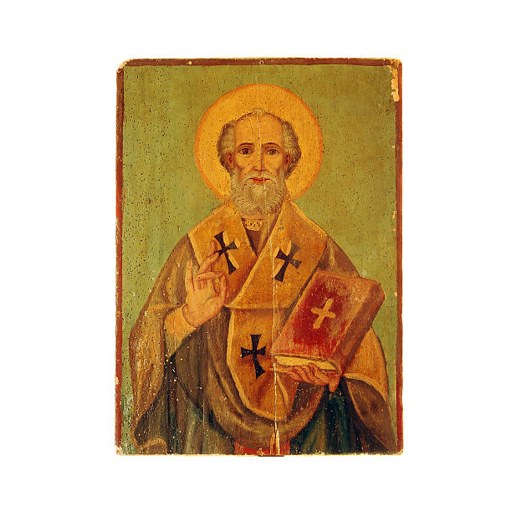
https://istockphoto.com/illustrations/saint-portrait
License: unknown
Saint Tariec
Saint- Gender
- male
- Church
- Catholic
Roles & Family
Biography
Saint Tariec is an obscure Breton saint whose cult is confined almost entirely to the coastal Léon country of northwestern Brittany, in what is now the département of Finistère in France. Like a great many of the so-called saints of Brittany, he left no contemporary written Life, and he does not appear with a securely attested notice in the principal early medieval martyrologies. What can be said of him rests on later local tradition, on the survival of his name in toponymy, and on a chapel that still bears his dedication. Hagiographical convention places him in the sixth century, the age associated with the movement of British Christians from Wales and Cornwall into Armorica and with the foundation of early monastic and eremitical sites along the Breton seaboard. No reliable evidence records his parentage, the place of his birth, or the year or circumstances of his death, and any attempt to supply those details would be conjecture.
The centre of his veneration is the Chapelle Saint-Tariec in the commune of Landunvez, standing on a small tidal islet off the Atlantic shore, a site sometimes called Île Saint-Tariec. The present granite chapel is of later medieval or early modern fabric, but it occupies a place of older religious use and became a destination for local pilgrimage and for the traditional Breton pardon. The isolation and maritime setting of the islet have led later writers to portray Tariec as a hermit or monk who withdrew to the coast, in keeping with the pattern of Celtic eremiticism familiar from other foundations in Brittany, Wales, and Ireland. The parish church of Landunvez itself is not dedicated to him; his cult is that of a secondary, highly localized holy man attached to this particular coastal sanctuary rather than that of a diocesan or parish patron in the later canonical sense.
Some popular and local accounts, again without firm documentary proof, associate Tariec with the circle of Saint Paul Aurelian (Pol de Léon), the principal evangelizer of the Léon region, who is himself said in medieval tradition to have come from Wales in the sixth century with a group of disciples. Such linkages are typical of Breton hagiography, which often grouped lesser local names around a better-known founder in order to explain the scatter of chapels and place-names. Nothing in the surviving record demonstrates that Tariec was among Paul Aurelian’s companions, nor that he originated in Britain rather than in Armorica itself. He is presented in the tradition as a monastic or eremitical figure and therefore as unmarried and celibate; no spouse or children are recorded.
Saint Tariec was never the subject of a formal papal canonization or beatification. His status, like that of the great majority of early Breton saints, rests on immemorial local cult rather than on a Roman process. Later local calendars and popular devotion have assigned him a commemoration, but the date is not uniformly or securely recorded in the standard liturgical sources, and the annual pardon at the Landunvez chapel has followed the customary Breton pattern of a summer Sunday rather than necessarily coinciding with a fixed liturgical feast. The continued existence of the chapel and the persistence of the name Tariec in the landscape of Landunvez remain the principal historical testimony to his veneration. Beyond that localized memory, the biographical facts of his life cannot be recovered from reliable sources.