Saint Ténénan is a saint of the Catholic Church. Saint Ténénan's feast day is celebrated on 16 July. Saint Ténénan is the patron saint of Plabennec.
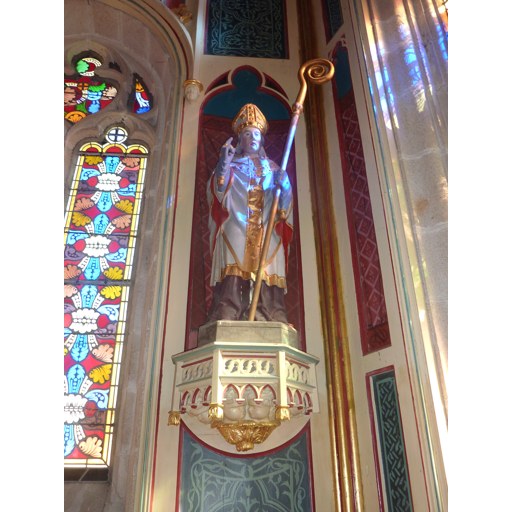
Moreau.henri
License: CC BY-SA 3.0
Saint Ténénan
Saint- Feast Day
- 16 July
- Gender
- male
- Church
- Catholic
Places
Roles & Family
Patronage
Plabennec
Biography
Saint Ténénan, also known in Breton tradition as Tinidor and in Latin sources as Tenenanus, is an early medieval saint of western Brittany whose cult is centered on Plabennec in the historic country of Léon (today in Finistère, France). Later hagiography places him in the seventh century and describes him as a native of Wales who crossed to Armorica. No contemporary Life or charter survives, and the narrative of his career is known only from medieval and early modern legend. He belongs to the large group of Insular holy men whose memory was preserved in parish dedications, place-names, and late vitae rather than in documents of their own age.
According to the traditional account, Ténénan was of noble British or Welsh birth and received a monastic education. He is said to have been afflicted with leprosy or a severe skin disease. Seeking an eremitical life, he left Britain for the Léon peninsula. At a spring in the place that would become Plabennec he was miraculously healed. In thanksgiving he built an oratory and lived there as a hermit and monk. Some versions of the legend link him with Saint Paul Aurelian, the British founder of the see of Saint-Pol-de-Léon, and present Ténénan as a later bishop of Léon. That episcopal title is part of local tradition; it cannot be confirmed from independent early records of the diocese, and the precise relationship between the two figures remains uncertain.
He is believed to have died at Plabennec, which remained the focus of his cult. The parish church of Plabennec is dedicated to him, and he is regarded as patron of the commune. His feast is kept on 16 July. The story of his healing at a holy well belongs to a wider pattern in Celtic and Breton hagiography, in which Insular monks found hermitages in Armorica, were associated with miraculous springs, and became patrons of the parishes that grew up around their cells. A traditional year of death around 635 is sometimes given in later calendars, but it is not supported by contemporary evidence.
Because so little can be verified independently, Ténénan is best understood as one of the numerous early Breton saints whose memory was kept alive by local devotion rather than by a recoverable political or ecclesiastical career. His legend reflects the migration of British Christians to Armorica in the early Middle Ages and the formation of the Breton church around hermitages and monastic bishops. Devotion to him has remained essentially regional, concentrated in Léon and especially at Plabennec, rather than spreading into a wider European cult.