Saint Tujan is a saint of the Catholic Church. Saint Tujan's feast day is celebrated on November 9. Saint Tujan is the patron saint of Saint-Tujan.
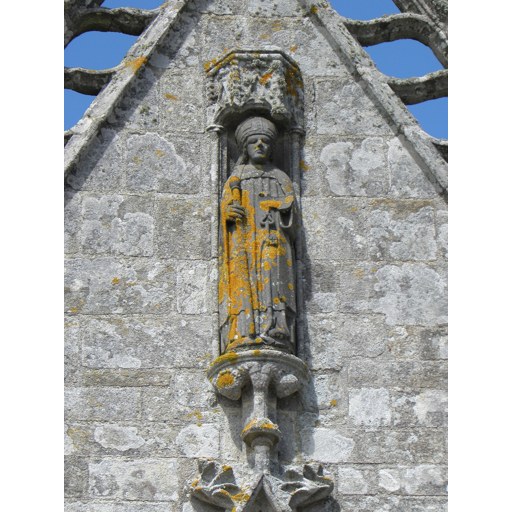
GO69
License: CC BY-SA 3.0
Saint Tujan
Saint- Feast Day
- November 9
- Gender
- male
- Church
- Catholic
Places
Roles & Family
Patronage
Saint-Tujan
Biography
Saint Tujan is an obscure Breton saint whose cult is attested in the historic region of Cornouaille in western Brittany. He is the eponymous patron of the commune of Saint-Tujan in the department of Finistère, France. Like the majority of local saints of early medieval Brittany, Tujan belongs to a poorly documented stratum of Christian memory dating to the fifth through seventh centuries, when Brittonic settlers and monastic founders established churches and hermitages across Armorica. No contemporary chronicle or inscription records his name, and the outlines of his life are known only through later medieval and early modern local tradition.
Tradition describes Tujan as a monk, sometimes associated with the Abbey of Landévennec, the celebrated monastery founded by Saint Guénolé (Winwaloe). He is said to have withdrawn from communal life to pursue an eremitical vocation at the site that now bears his name, on the Atlantic coast of southern Finistère. There he is believed to have died and to have been buried, and a parish church dedicated to him subsequently became the center of his veneration. No reliable information survives concerning his family, his place of birth, or the exact year of his death. Claims that he originated in the British Isles, as did a number of other Breton monastic founders, remain unverified.
Tujan was never formally canonized by a pope according to the procedures that developed from the twelfth century onward. His recognition as a saint rests on the ancient pattern of local episcopal and popular cult, sometimes termed equipollent or pre-congregation canonization. He does not appear among the popes or patriarchs of the Church, nor is there any indication that he held high ecclesiastical office. As a monk and hermit he is presumed to have lived a celibate life; no spouse or children are mentioned in the traditions concerning him. His feast has been observed locally on 9 November.
The historical study of such figures is constrained by the nature of the sources. Breton hagiography of the early Middle Ages was often composed long after the lifetimes of its subjects and frequently adapted common literary motifs—the departure from a famous abbey, the search for solitude, the foundation of a church—to explain existing place-names and dedications. Tujan’s cult, anchored in the toponym Saint-Tujan and in parish observance, is the most secure fact about him. Beyond that, the historian can say only that a holy man of that name was remembered in Cornouaille and that his memory was kept alive in the liturgical and civic life of the community that claimed him as patron.