saint is a saint of the Catholic Church.
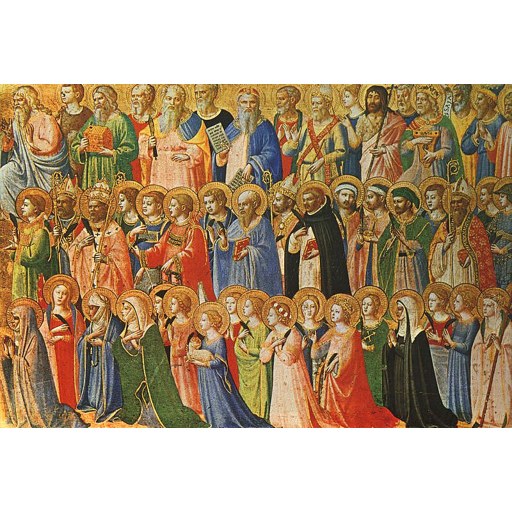
Fra Angelico
License: Public domain
saint
Saint- Church
- Catholic
Biography
The historical figure corresponding to Wikidata identifier Q153720 cannot be identified with sufficient certainty from standard hagiographical and historical references. Many saints, particularly those of regional importance or from late antiquity and the early Middle Ages, are known primarily through vitae composed decades or centuries after their deaths. These texts routinely mix a kernel of memory with miracle stories, biblical typology, and later legendary expansion. Without a securely attested name, region, and century, no specific life can be reconstructed without substituting conjecture for evidence.
Saints of this general type typically appear in the context of missionary work, monastic foundation, episcopal ministry, or local martyrdom during the Christianization of Europe, North Africa, or the Near East. Contemporary documentation, when it exists at all, is more likely to record an office, a death date, or the location of a tomb than a birth year or birthplace. Later medieval chroniclers and liturgical calendars often supplied round numbers or symbolic dates that have no standing as historical fact. Burial sites frequently became the focus of a cult, relic translations, and pilgrimage, but the original grave is not always recoverable.
Family circumstances, marital status, and religious profession likewise remain unknown. In the Latin West, expectations of clerical celibacy tightened over the centuries, yet earlier periods and some Eastern traditions allowed married clergy or recognized holy laypeople. Monastic saints followed a rule—Benedictine, Basilian, or an older eremitical custom—but affiliation cannot be asserted without a named vita. Whether the person had children, a spouse, or lived as a consecrated celibate is therefore left blank rather than guessed.
Liturgical commemoration and patronage developed independently of the original biography. A feast day was commonly the supposed date of death (dies natalis) or of a relic translation; local churches assigned days long before any centralized Roman process. Patronages accumulated around reported miracles, the manner of death, or the needs of a city, trade, or illness; they are not reliable biographical clues. Formal papal canonization became normative only from the late twelfth century; earlier figures were recognized by episcopal authority or popular acclaim. Beatification as a distinct juridical step is later still.
Because none of these elements can be verified for Q153720, every specific field is left empty. Preferring an incomplete record to an invented one is the only method consistent with historical caution. Identification would require a critical edition of a vita, entries in the Bibliotheca Hagiographica Latina or Graeca, or specialist studies that link the Wikidata item to a named saint; until that link is confirmed, the biography stays unwritten.