Samarth Ramdas Swami is a saint of the Catholic Church (1608 - 1681).
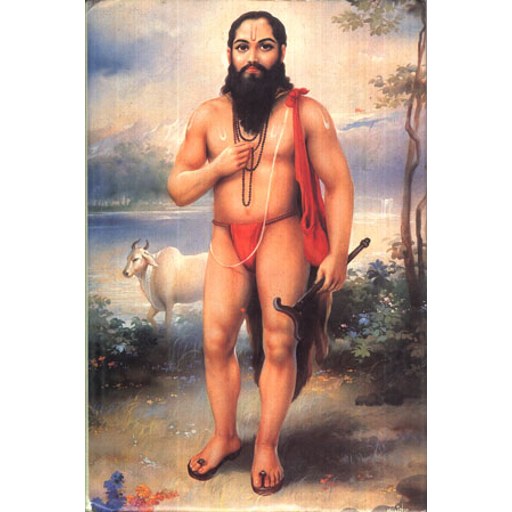
License: CC BY-SA 3.0
Samarth Ramdas Swami
Saint- Life Span
- 1608 - 1681 (age 73)
- Gender
- male
- Church
- Catholic
Places
Roles & Family
Religious Information
Biography
Samarth Ramdas, born Narayan Suryajipant Thosar in 1608 in the village of Jamb in the Jalna region of present-day Maharashtra, was a Hindu saint, poet, and spiritual teacher of the Marathi Bhakti tradition. Traditional accounts hold that he was born on Ram Navami into a Deshastha Rigvedi Brahmin family. From an early age he showed a strong inclination toward devotion to Rama. Around the age of twelve, according to hagiographic tradition, he left home rather than enter married life, adopting the name Ramdas and embracing a path of celibacy, pilgrimage, and austerity. He spent many years in meditation and physical discipline, especially along the Godavari, and is closely associated with the worship of Hanuman as the ideal of strength, service, and devotion.
Ramdas traveled widely across the Indian subcontinent and established a network of mathas (monastic centers) and Hanuman temples, particularly in Maharashtra. He taught a combination of bhakti (devotion), moral discipline, and practical engagement with the world, urging his followers to cultivate both inner purity and bodily vigor. His instruction often emphasized self-reliance, social duty, and resistance to injustice, themes that later Maratha memory linked to the political rise of the Marathas in the seventeenth century. He is traditionally described as a spiritual preceptor of Chhatrapati Shivaji, who is said to have granted him the hill fort of Sajjangad near Satara; modern historians generally accept that the two figures were contemporaries and that Ramdas's teachings circulated in Shivaji's milieu, while treating some later guru-disciple legends with caution.
His principal literary work is the Dasbodh, a large Marathi verse treatise on spiritual knowledge, ethics, and worldly conduct, composed in the later part of his life and notably associated with the cave hermitage of Shivthar Ghal. He also wrote Manache Shlok, a set of verses addressing the mind, as well as numerous abhangas, karunas, and other devotional poems dedicated to Rama and Hanuman. These works remain central to Marathi religious literature and to the Ramdasi sampradaya that grew from his disciples.
Ramdas spent his final years at Sajjangad, where he died in 1681. His samadhi there became a major pilgrimage site. The Ramdasi order continued through his disciples, maintaining mathas and the recitation of his works. In later centuries he has been remembered in Maharashtra as a saint who joined intense Rama-bhakti with a call for social and physical strength, and his writings continue to be read as both spiritual guides and documents of seventeenth-century Marathi thought.