Sancha of León is a blessed of the Catholic Church (d. 1067).
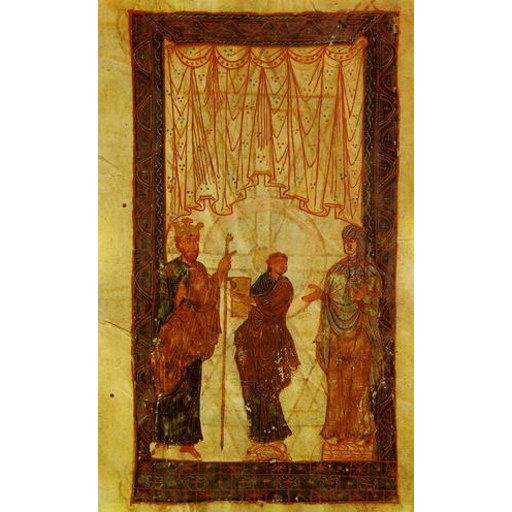
Fructuosus
License: Public domain
Sancha of León
Blessed- Life Span
- d. 1067
- Gender
- female
- Church
- Catholic
Places
Relics & Where to Venerate
Location unknown
The bodily remains of Sancha of León are a first-class relic. Venerated at Basilica of San Isidoro.
Roles & Family
Religious Information
Biography
Sancha of León was a queen consort of the Kingdom of León in the eleventh century, daughter of King Alfonso V of León and Queen Elvira Menéndez and a member of the Astur-Leonese royal house that ruled the principal Christian kingdom of northwestern Iberia. Her brother Bermudo III succeeded their father on the Leonese throne. Surviving chronicles do not record an exact date or place of her birth; historians place it in the second decade of the eleventh century within the Kingdom of León.
In 1032 she was married to Ferdinand, count of Castile and son of King Sancho III of Pamplona. The marriage tied the Leonese dynasty to the rising power of Castile and Navarre. When Bermudo III was killed without a surviving son at the Battle of Tamarón in 1037, Ferdinand claimed León through Sancha’s hereditary right, and she became queen consort. Ferdinand was anointed king, and the couple thereafter ruled León and Castile; later campaigns extended their authority over Galicia. They had five children who reached adulthood: the infantas Urraca, later lady of Zamora, and Elvira, later lady of Toro; and the infantes Sancho, who received Castile, Alfonso, who received León, and García, who received Galicia.
Sancha and Ferdinand were among the leading royal patrons of the Church in eleventh-century Iberia. In 1063 they obtained the relics of Saint Isidore from Seville, then under Muslim rule, and translated them to León with great ceremony. They rebuilt the older church of Saints John and Pelagius as the Basilica of San Isidoro and established there a royal pantheon for the Leonese dynasty. Sancha’s part in the translation and in the endowment of San Isidoro is attested in contemporary and near-contemporary sources and became central to her later reputation for piety.
Ferdinand died in December 1065 after dividing his realms among their three sons and granting the infantas lordship over important cities. As queen mother, Sancha remained a figure of dynastic authority in the first years of that partition, which soon produced conflict among her children. She died in 1067 and was buried in the Royal Pantheon of the Basilica of San Isidoro in León, beside her husband. Later tradition associated her closely with that church and with the cult of Saint Isidore, though she was not the subject of a formal papal canonization.