Sant Riwari is a saint of the Catholic Church. Sant Riwari's feast day is celebrated on 3 September. Sant Riwari is the patron saint of Saint-Rivoal.
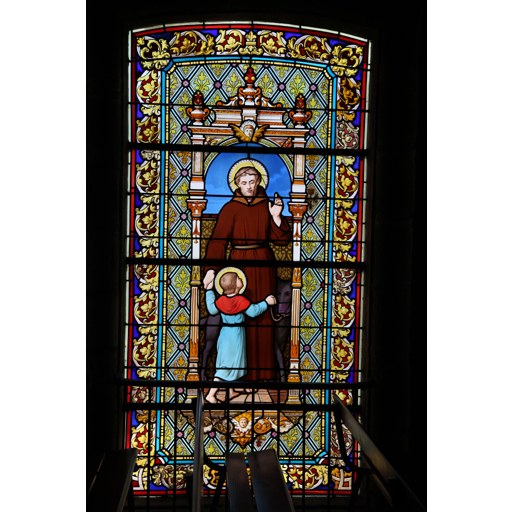
Ggal
License: CC BY-SA 3.0
Sant Riwari
Saint- Feast Day
- 3 September
- Gender
- male
- Church
- Catholic
Places
Roles & Family
Patronage
Saint-Rivoal
Biography
Sant Riwari, known in French as Saint Rivoaré (also spelled Rivoare, Rivoal, Riware, or Riwal), is a Breton saint of the early medieval period, traditionally placed in the sixth century. He is the eponymous patron of the commune of Saint-Rivoal in the Monts d'Arrée of Finistère, in western Brittany. Like many Armorican saints of this era, his life is known almost exclusively through later hagiographic tradition rather than contemporary documents, and modern historians treat the biographical details as legendary in character. He is remembered as a hermit who settled in the interior of Cornouaille, in a landscape of hills and moorland that later took his name. No reliable source records a precise year of birth or death, and no contemporary chronicle mentions him.
According to Breton tradition, Rivoaré was of insular British origin, one of the many holy men associated with the migrations from Wales or Cornwall into Armorica during the fifth and sixth centuries. He is said to have embraced the eremitical life, living in solitude and prayer in the Arrée mountains at the site later identified with Saint-Rivoal. The earliest notices of him belong to later medieval and early modern collections of Breton saints' lives, notably the seventeenth-century compilations that gathered local oral tradition, parish dedications, and place-names. Those collections, useful as witnesses to cult, are not independent historical biographies. Nothing authentic survives in the way of writings, a contemporary vita, or relics of undisputed early provenance.
A related legend links Rivoaré to Sainte Haude (Breton: Santez Heodez), who is sometimes described as his sister. In that story, Haude, a young woman of piety from the Léon countryside, was murdered; Rivoaré is said to have discovered her body and to have honored her memory. The association belongs to the same stratum of local legend that surrounds many lesser Breton saints and cannot be confirmed from independent historical evidence. It does, however, show how the cults of Rivoaré and Haude were remembered together in western Brittany, and how kinship among saints was a common hagiographic device for tying neighbouring dedications into a single sacred landscape.
The parish church of Saint-Rivoal became the centre of his cult, and the village and commune still bear his name. He remains the patron of that place. His feast has been observed locally on 3 September. He was never the subject of a formal papal canonization of the later medieval or modern type; his sanctity rests on ancient popular and diocesan cult, as is typical of the early Breton saints. Beyond the dedication of Saint-Rivoal, the survival of his name in Breton toponymy, and the traditional identification of his hermitage with that site, little else can be verified. The historian must therefore present him as an obscure but locally venerated hermit of early medieval Brittany whose historical outline remains largely irrecoverable.