Satoko Kitahara is a venerable of the Catholic Church (1929 - 1958).
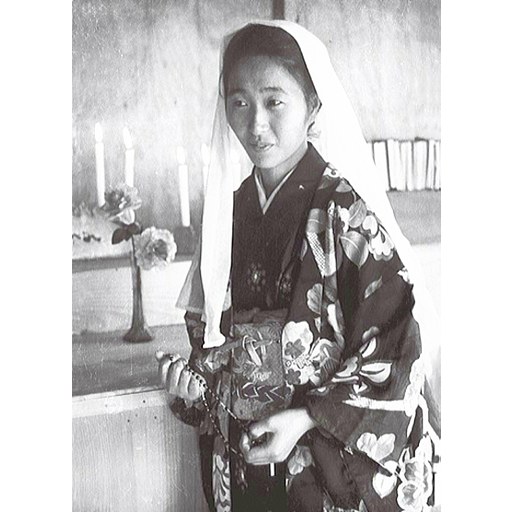
Unknown authorUnknown author
License: Public domain
Satoko Kitahara
Venerable- Life Span
- 1929 - 1958 (age 29)
- Gender
- female
- Church
- Catholic
Places
Roles & Family
Biography
Satoko Kitahara was born on 22 August 1929 in Tokyo, Japan, into a prosperous family during the late years of the Japanese Empire. She was raised in the conventional religious atmosphere of her class, in which Shinto and Buddhist customs framed family and civic life, and she received a careful education. The Pacific War and the American air campaign against Tokyo marked her adolescence; like many of her generation she witnessed destruction, displacement, and the collapse of the old order in 1945. In the occupation years she continued her studies and attended the University of the Sacred Heart in Tokyo, a Catholic women’s university conducted by the Society of the Sacred Heart, where Christian worship and the example of the sisters first became a living reality for her.
In 1949 she was baptized into the Catholic Church and received the Christian name Elisabeth. Conversion in occupied and early postwar Japan often meant a break with family expectation and with the majority religious culture; Kitahara’s choice placed her among a small minority. She did not treat baptism as a merely private affiliation. Reading the Gospel and observing the extreme poverty that still filled Tokyo’s backstreets, she looked for a way to live her new faith among the poorest. That search led her to Ari-no-machi, known in English as Ants Town, a community of ragpickers who collected, sorted, and sold scrap and waste on the urban fringe. The settlement had grown in the chaos after the war and was known to Catholic missionaries, including the Polish Conventual Franciscan Brother Zeno Żebrowski, whose work among Japan’s destitute was already famous.
Kitahara made Ants Town the center of her life. She taught the children of the scavengers, seeking to give them basic schooling and religious instruction that the public system did not provide them. She joined the adults in the humble labor of gathering recyclable refuse, refusing the protection of her family’s status. Contemporary witnesses described her as gentle, persistent, and unwilling to be treated as a visiting benefactress. She reduced her own standard of living, disposed of possessions, and accepted the overcrowding, dirt, and insecurity of the settlement. She never entered a convent or religious congregation, remaining a laywoman bound by no vows other than those of baptism. In the eyes of Japanese Catholics who later wrote about her, this identification with ragpickers was the core of her vocation.
The physical cost of that life was high. Tuberculosis remained a major killer in 1950s Japan, and Kitahara’s health gave way. She died in Tokyo on 23 January 1958, not yet twenty-nine years old. She had never married and left no children. Almost at once her story was retold in Catholic publications and in popular biographies that presented her as a Japanese example of modern lay holiness among the urban poor. Ants Town itself, and the memory of the young woman who had chosen it, became part of the folklore of Tokyo Catholicism. In subsequent decades the Church examined her life with a view to possible beatification; she has not been beatified or canonized, and she has no universal feast day or official patronages. Her historical importance lies in the concrete witness of a twentieth-century Japanese lay convert who, for less than a decade, shared the conditions of the city’s poorest inhabitants and died among them.