Satyrus of Milan is a saint of the Catholic Church (d. 378). Satyrus of Milan's feast day is celebrated on 17 September.
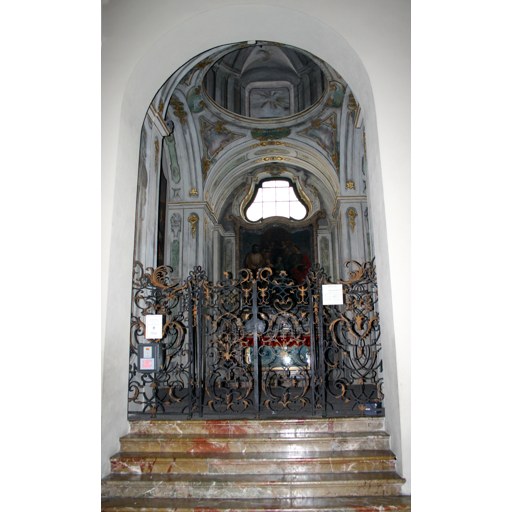
G.dallorto
License: Attribution
Satyrus of Milan
Saint- Life Span
- d. 378
- Feast Day
- 17 September
- Gender
- male
- Church
- Catholic
Places
Roles & Family
Biography
Satyrus of Milan, known in Italian as San Satiro, was a fourth-century Christian of the Roman senatorial class and the elder brother of Ambrose, bishop of Milan, and of Marcellina, a consecrated virgin. Their father, Aurelius Ambrosius, held the high imperial office of praetorian prefect of Gaul and was based at Trier, the seat of the Gallic prefecture, where the family is generally believed to have lived during the children's early years. After the father's death, which occurred while the children were still young, their mother took them to Rome. There they received the literary and legal education customary for their rank. The family was Christian; Marcellina received the veil from Pope Liberius, and the household maintained close ties with the Roman church.
Satyrus pursued a career in the civil administration of the later Roman Empire. Trained as a jurist, he held important prefectural or gubernatorial office and acquired a reputation for fairness and administrative skill. In 374 the clergy and people of Milan acclaimed his brother Ambrose, then a consular governor and still a catechumen, as bishop. Satyrus thereupon left public life in order to manage the temporal business of the Milanese church and the family's remaining estates, so that Ambrose could devote himself to episcopal ministry. The principal contemporary witness to Satyrus's character is Ambrose himself, who in two funeral addresses portrayed his brother as chaste, generous, prudent, and deeply loyal, a layman rather than a cleric or monk.
A journey to Africa, undertaken to recover family property that had been appropriated, nearly cost Satyrus his life. Ambrose later related that, after a shipwreck, Satyrus obtained the Eucharist from a baptized Christian, wrapped the consecrated bread in his scarf or orarium, and bound it about his neck; he credited his rescue from the sea to this act of devotion. The episode is frequently cited in later theology as early evidence for reservation of the Eucharist and for lay reverence toward the sacrament. Having secured the inheritance, Satyrus returned to northern Italy. He soon fell ill and died at Milan. The year of his death is generally given as 378. Ambrose preached and subsequently published the two books known as De excessu fratris Satyri, which combine personal lament, moral portrait, and Christian consolation and remain a major source for the family history of the Ambrosii.
Satyrus was buried at Milan near the relics of martyrs, in the funerary complex associated with what became the Basilica of Sant'Ambrogio. His cult is ancient and local. A church dedicated to him existed in Milan by the ninth century and was later rebuilt as Santa Maria presso San Satiro. The Roman Martyrology commemorates him on 17 September. He was not the object of a formal papal canonization of the kind later practiced by the Congregation of Rites; veneration arose by popular and episcopal acclaim in the Milanese church of late antiquity. Beyond Ambrose's orations and the liturgical tradition of Milan, little independent documentation of his life survives, and even basic data such as an exact year of birth remain uncertain.