Septimius of Iesi is a saint of the Pre-Schism (Universal) Church (d. 307). Septimius of Iesi's feast day is celebrated on 22 September. Septimius of Iesi is the patron saint of Jesi;Diocese of Jesi.
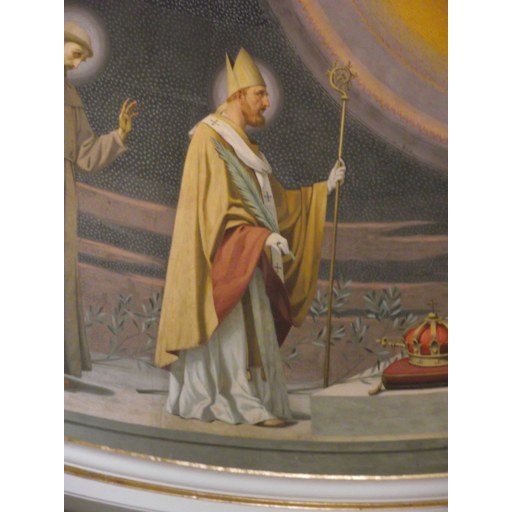
Parsifall
License: CC BY-SA 4.0
Septimius of Iesi
Saint- Life Span
- d. 307
- Feast Day
- 22 September
- Gender
- male
- Church
- Pre-Schism (Universal)
Places
Roles & Family
Patronage
Jesi;Diocese of Jesi
Canonization
Biography
Septimius of Iesi, known in Italian as San Settimio di Jesi, is venerated by the Catholic Church as a bishop and martyr and is honored in local tradition as the first bishop of Iesi (modern Jesi) in the Marche of central Italy. Virtually no contemporary fourth-century documentation survives for his life. The biographical particulars that appear in later accounts rest on a passio composed many centuries after the period in which he is supposed to have lived, and those particulars contain chronological contradictions. The most secure historical facts are the antiquity of his cult in Jesi, the dedication of the city’s cathedral to him, his entry in the martyrological tradition, and his long-standing role as patron of the city and diocese.
Later legend, recorded in early modern local sources, asserts that Septimius was born in Germany, became a priest, and travelled into Italy, where Pope Marcellus I consecrated him bishop of Iesi. That narrative cannot be synchronized with the known papal chronology: Marcellus I reigned only in 308-309, whereas the year of death customarily assigned to Septimius is 307. The same legend states that he was put to death in a persecution associated with an emperor called Maximinus. Maximinus Daia, however, ruled in the East, not in Italy, where the relevant authorities around that time were Galerius and Maxentius. These inconsistencies show that the written life is a pious reconstruction rather than a record based on authentic archives. No independent evidence confirms his German origin, the identity of the pope who consecrated him, or the precise imperial context of his death.
Despite the weakness of the literary sources, the church of Jesi has from an early period regarded Septimius as its founding bishop and as a martyr. His relics are preserved and venerated in the cathedral of Jesi, which is dedicated to him under the title Cattedrale di San Settimio. The Roman Martyrology commemorates him on 22 September at Jesi. He is the patron saint of the city of Jesi and of the Diocese of Jesi. Standard hagiographical reference works do not attach to him any wider set of patronages over professions, illnesses, or other places.
Scholars of early Italian Christianity therefore treat Septimius as one of a large group of local episcopal saints whose memory is guaranteed by cult, liturgy, and cathedral dedication rather than by datable historical texts. Nothing reliable is known of his family, education, or whether he was married or had children. The traditional year of death, 307, and the traditional place of death, Iesi, remain the date and location given in encyclopedic and liturgical sources, but they should be understood as conventional attributions of the later legend. His feast continues to be observed on 22 September, and he remains central to the religious identity of Jesi.