Seraphim Chichagov is a saint of the Eastern Orthodox Church (1856 - 1937). Seraphim Chichagov's feast day is celebrated on 11 December.
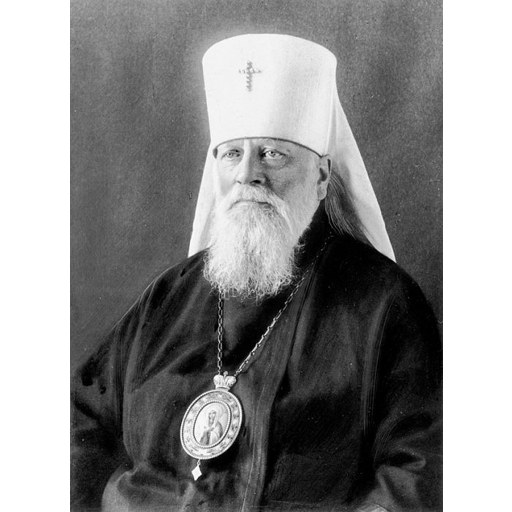
anonimus
License: Public domain
Seraphim Chichagov
Saint- Life Span
- 1856 - 1937 (age 81)
- Feast Day
- 11 December
- Gender
- male
- Church
- Eastern Orthodox
Places
Relics & Where to Venerate
Location unknown
The bodily remains of Seraphim Chichagov are a first-class relic. Venerated at Butovo firing range.
Roles & Family
Religious Information
Canonization
Biography
Seraphim Chichagov was born Leonid Mikhailovich Chichagov on 9 January 1856 in Saint Petersburg, capital of the Russian Empire, into a noble family with a long tradition of naval and military service. His ancestors included Admiral Vasily Chichagov and Admiral Pavel Chichagov, the latter having served as minister of the navy in the early nineteenth century. Educated at the Imperial Page Corps in Saint Petersburg, Leonid entered the artillery and took part in the Russo-Turkish War of 1877-1878, for which he received several decorations. He remained an officer in the imperial army into the 1890s while cultivating a growing interest in theology, church history, iconography, and medicine.
In 1879 he married Natalia Nikolaevna Dokhturova; the couple had four daughters. Under the influence of John of Kronstadt, who became his spiritual father, Chichagov prepared for ordained ministry and was made a priest in 1893. After his wife's death in 1895 he moved more fully into monastic and scholarly work. In 1898 he was tonsured a monk with the name Seraphim, recalling Seraphim of Sarov, whose biography and the history of the Diveyevo community he had researched and published. His Chronicle of the Seraphim-Diveyevo Monastery contributed to the official canonization of Seraphim of Sarov in 1903. He also painted icons, composed church music, and wrote on pastoral and medical themes, including works that discussed the relationship between spiritual life and bodily health.
Consecrated to the episcopate in 1905, he served as bishop in Sukhumi, then in Orel, Kishinev, and Tver, gaining a reputation as a preacher, administrator, and organizer of charity, including wartime relief during the First World War. He took part in the Local Council of the Russian Orthodox Church in 1917-1918. Following the Bolshevik Revolution he shared the Church's increasingly precarious position under Soviet rule. In 1928 he was appointed Metropolitan of Leningrad, a post he held until he retired in 1933. Living thereafter in the Moscow region, he was arrested by the NKVD in 1937 during the Great Terror. He was sentenced to death and shot on 11 December 1937 at the Butovo firing range south of Moscow, where his body was placed in a mass grave.
The Russian Orthodox Church glorified him as a hieromartyr in 1997 for local veneration in the Moscow diocese and included him among the New Martyrs and Confessors of Russia at the Bishops' Council of 2000. He is commemorated on 11 December, the day of his execution, and together with the synaxis of the New Martyrs. His path from guards officer and married priest to monk, diocesan bishop, metropolitan, and victim of Soviet repression has made him one of the better-documented episcopal martyrs of the Stalin period.