Serapion of Alexandria is a saint of the Catholic Church (d. 249). Serapion of Alexandria's feast day is celebrated on November 14.
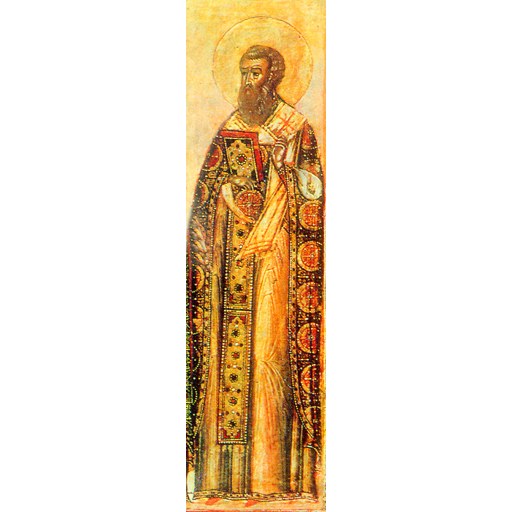
https://www.pinterest.com/ideas/saint-serapion/904776703543/
License: unknown
Serapion of Alexandria
Saint- Life Span
- d. 249
- Feast Day
- November 14
- Gender
- male
- Church
- Catholic
Places
Roles & Family
Biography
Serapion of Alexandria was a third-century Christian who suffered martyrdom in Alexandria, in the Roman province of Egypt, during a popular outbreak of anti-Christian violence in 249. No ancient source records his parentage, occupation, age, or the circumstances of his conversion. The only early account of his death is contained in a letter of Dionysius, bishop of Alexandria, addressed to Fabius, bishop of Antioch. Eusebius of Caesarea quoted that letter at length in Book VI of the Ecclesiastical History, and later Latin martyrologies derived their notice of Serapion from the same tradition. Dionysius wrote as a contemporary and as the chief pastor of the Alexandrian church; his narrative is therefore the nearest thing to an eyewitness report that survives.
Dionysius explained that persecution in Alexandria did not wait for an imperial decree. A full year before the emperor Decius, who reigned from 249 to 251, published his edict requiring inhabitants of the empire to sacrifice to the traditional gods, a pagan seer and poet stirred the Alexandrian populace against the Christians. Mobs invaded Christian homes, dragged believers to temples, and demanded that they utter blasphemies or offer sacrifice. Those who refused were beaten, mutilated, or killed. Dionysius names several victims of this riot: Metras, who was stoned after his face and eyes were lacerated with reeds; Quinta, who was scourged and stoned after being dragged over millstones; and the elderly virgin Apollonia, whose teeth were broken and who threw herself into a prepared fire rather than apostatize. In the same sequence of assaults the crowd laid hold of Serapion.
The rioters found Serapion in his own house. They tortured him with great cruelty, broke all his limbs, and at last threw him headlong from an upper story, so that he died of the fall and of the injuries already inflicted. Dionysius gives no further personal details. He does not say whether Serapion was a cleric or a layman, whether he had a family, or how long he had been a Christian. The manner of death, however, was remembered. The traditional Roman Martyrology entered his name on 14 November, stating that under the emperor Decius the persecutors subjected him to savage torments, shattered every member of his body, and cast him down from the upper part of his house, by which passion he received the crown of martyrdom. Because he died in the age of the early persecutions, he was never formally canonized by a later pope; veneration of him rests on the ancient Alexandrian witness and on the martyrological books of the Western church.
The name Serapion was common in Egypt, and several other early Christian figures must be kept distinct from the Alexandrian martyr. In another letter, also preserved by Eusebius, Dionysius mentions an old man of Alexandria likewise named Serapion who had lapsed by offering sacrifice, who lay dying, and who sent his grandson to fetch a priest so that he might be reconciled and receive the Eucharist; that Serapion is not the martyr. Serapion of Antioch was a bishop of the late second and early third centuries. Serapion of Thmuis was a fourth-century Egyptian bishop, a disciple of Anthony the Great and an ally of Athanasius. Serapion the Sindonite was a desert ascetic of a later generation. For the martyr of 249 the documentary trail ends with Dionysius’s brief notice. No birth year, no burial place, and no medieval legend of any substance have been transmitted. What the sources do establish is that a Christian of Alexandria named Serapion refused the demands of a lynch mob in 249, endured the breaking of his body in his own house, and was killed by being thrown from an upper floor.