Severinus of Noricum is a saint of the Catholic Church (d. 482). Severinus of Noricum's feast day is celebrated on 8 January. Severinus of Noricum is the patron saint of Austria;Bavaria;prisoners;San Severo;Frattamaggiore.
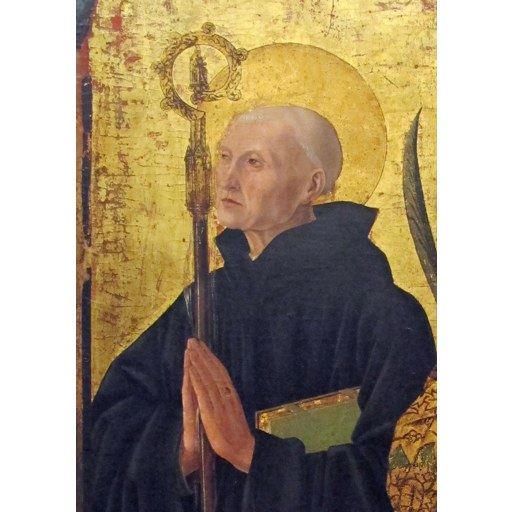
Foto: Sailko Gemälde: Meister von San Severino Bearbeitung (Ausschnitt erstellt, gedreht, entzerrt): Christoph Waghubinger (User:Lewenstein)
License: CC BY-SA 3.0
Severinus of Noricum
Saint- Life Span
- d. 482
- Feast Day
- 8 January
- Gender
- male
- Church
- Catholic
Places
Relics & Where to Venerate
Location unknown
Six years after his death, his monks were driven from their abbey, and his body was taken to Italy, where it was at first kept in the Castel dell'Ovo, Naples, then eventually entombed at the Benedictine monastery rededicated to him, the Abbey of San Severino in the city of Naples
Location unknown
Six years after his death, his monks were driven from their abbey, and his body was taken to Italy, where it was at first kept in the Castel dell'Ovo, Naples, then eventually entombed at the Benedictine monastery rededicated to him, the Abbey of San Severino in the city of Naples
Roles & Family
Patronage
Austria;Bavaria;prisoners;San Severo;Frattamaggiore
Biography
Saint Severinus of Noricum was a Latin-speaking monk, hermit, and missionary of the fifth century whose work among the remaining Roman provincials of Noricum later earned him the title Apostle of Noricum. The principal source for his life is the Vita Sancti Severini, composed about 511 by his disciple Eugippius. Eugippius records that Severinus consistently refused to disclose his native country, family, or earlier career. He was clearly a man of education and Latin culture and was familiar with Eastern-style ascetic practice, but later conjectures that placed his origins in southern Italy, North Africa, or the senatorial aristocracy cannot be verified from the sources. He is first attested in Noricum in the years after Attila’s death in 453, when imperial administration and regular garrisons along the Danube had largely collapsed and the surviving towns were exposed to Germanic war-bands.
Severinus moved among the riverside settlements of Asturis, Comagenis, Ioviaco, and above all Favianis, identified with present-day Mautern an der Donau. He founded monastic communities, insisted on fasting, prayer, and almsgiving, organized the collection and distribution of food in times of famine, and worked to ransom captives. He dealt repeatedly with the Rugian kings who dominated the left bank of the Danube, including Flaccitheus and his son Feletheus (Feva) and Feletheus’s wife Giso, sometimes restraining their harshness toward the provincials and at other times warning towns of impending raids. He held no episcopal or secular office; his authority was that of an abbot and holy man whose counsel was sought by both Romans and barbarians.
The Vita ascribes to him numerous miracles, exorcisms, healings, and prophecies. A frequently cited episode is his encounter with the young Odoacer, then an obscure warrior passing through Noricum, whom Severinus is said to have greeted as a future king; Odoacer later ruled Italy from 476. Severinus died at his monastery in Favianis on 8 January 482. In 488, when Odoacer ordered the evacuation of the remaining Roman population of Noricum into Italy, the monks carried his body with them. After an interval the relics were placed in a mausoleum at Castellum Lucullanum near Naples through the patronage of a noblewoman named Barbaria. Later translations brought them to the monastery of Santi Severino e Sossio in Naples; after that house was suppressed in the early nineteenth century, the principal relics were taken to Frattamaggiore.
Severinus has been venerated as a saint since late antiquity, without a recorded formal canonization of the later medieval type. His feast is kept on 8 January. He is commonly named as a patron of Austria and of Bavaria and is invoked on behalf of prisoners; he is also patron of San Severo and of Frattamaggiore, where his relics are honored. His life remains a central witness to the last generation of Roman Noricum and to the survival of Latin monasticism on the Danube frontier.