Severinus of Sanseverino is a saint of the Catholic Church (d. 550). Severinus of Sanseverino's feast day is celebrated on 8 June. Severinus of Sanseverino is the patron saint of San Severino Marche.
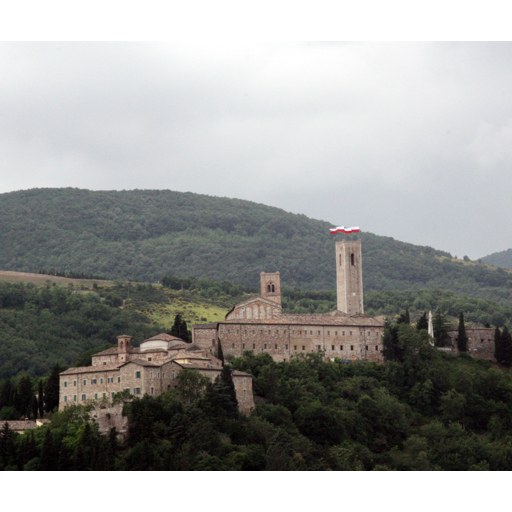
Tifialf (talk) 22:24, 22 July 2009 (UTC)
License: Public domain
Severinus of Sanseverino
Saint- Life Span
- d. 550
- Feast Day
- 8 June
- Gender
- male
- Church
- Catholic
Places
Roles & Family
Patronage
San Severino Marche
Biography
Severinus of Sanseverino, known in Latin as Severinus of Septempeda and in Italian as San Severino di Settempeda, was a sixth-century bishop of the Picene town of Septempeda in central Italy, the place that later took his name as San Severino Marche. Hagiographical tradition presents him as a native of that municipium, born to a wealthy and socially prominent family. Together with his brother Victorinus (Vittorino), who is also venerated as a saint, he is said to have given the family property to the poor and withdrawn into the eremitical life in the hills near his birthplace. This pattern of aristocratic conversion and ascetic retreat is characteristic of Italian Christianity in late antiquity, though no contemporary document records the brothers’ early years, and the outline of their lives is known only from later local legend and martyrological notices.
According to the same tradition, Pope Vigilius, whose pontificate (537–555) coincided with the Gothic War in Italy, called Severinus from his hermitage and appointed him bishop of Septempeda, over the hermit’s reluctance to accept pastoral office. Victorinus is remembered as remaining in the eremitical state, and in some accounts is associated with Camerino. Severinus’s episcopate would have fallen in a period of extreme hardship for Picenum, which was repeatedly crossed and devastated during the long conflict between the Ostrogoths and the Byzantine Empire. Later writers credit him with holy governance of a war-torn flock, but sixth-century chronicles and the surviving papal registers do not mention him, so the details of his administration cannot be independently confirmed.
He is traditionally held to have died on 8 June, about the year 550, and to have been buried in his own city. In the Middle Ages the ancient name Septempeda dropped out of ordinary use and the town came to be called San Severino in his honour, a designation preserved in the modern commune of San Severino Marche in the Marche region. His relics have long been enshrined in the crypt of the old cathedral (Duomo Vecchio), dedicated to Saints Severinus and Fortunatus. The Roman Martyrology commemorates him on 8 June. He is the principal patron of San Severino Marche. Because he belongs to the age of the early, locally formed cult of saints, he was never the object of a formal papal canonization of the later medieval or Tridentine type; his cult grew from diocesan memory and was received into the wider martyrological tradition.
Strictly historical knowledge of Severinus remains slight. The standard account—noble birth at Septempeda, joint renunciation of wealth with his brother, the hermitage, elevation to the see by Pope Vigilius, and death in the mid-sixth century—is the version preserved in Italian diocesan tradition and in collections such as the Acta Sanctorum. It cannot be checked against contemporary narrative sources. What can be said with confidence is that a bishop of this name was remembered at Septempeda, that his feast was fixed on 8 June, and that the medieval and modern identity of San Severino Marche is bound up with his cult. He stands as a representative figure of the late antique Italian bishop who combined ascetic withdrawal with the care of a local church in a time of political collapse and reconstruction.