Sidonius Apollinaris is a saint of the Catholic Church. Sidonius Apollinaris's feast day is celebrated on 21 August.
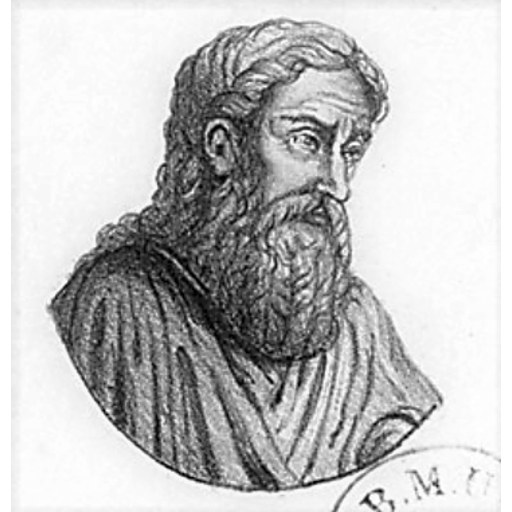
G. Mercier
License: Public domain
Sidonius Apollinaris
Saint- Feast Day
- 21 August
- Gender
- male
- Church
- Catholic
Places
Roles & Family
Religious Information
Biography
Gaius Sollius Modestus Apollinaris Sidonius, known to later generations as Sidonius Apollinaris, was a Gallo-Roman aristocrat, poet, imperial official, and bishop whose life spanned the final decades of Roman political authority in Gaul. He was born in the first half of the fifth century at Lugdunum, the city now called Lyon, into a senatorial family that had already supplied two praetorian prefects of Gaul. His grandfather Apollinaris held that prefecture under the usurper Constantine III in the early fifth century, and his father, likewise named Apollinaris, occupied the same post around the middle of the century. Raised in this milieu of landed wealth and classical learning, Sidonius received the rhetorical education still available in the schools of southern Gaul. That training formed the style of the panegyrics and letters that constitute his principal literary legacy and that remain indispensable sources for the social and political history of the period.
In the early 450s Sidonius married Papianilla, daughter of the Gallic magnate Eparchius Avitus, who was proclaimed Western emperor at Arles in 455. The marriage produced several children, including a son, Apollinaris, who later became bishop of Clermont, and daughters among whom Severiana is named in the correspondence. Sidonius’s public career unfolded through a series of imperial panegyrics. He delivered verses in honor of Avitus at Rome in 456, of Majorian at Lyon in 458, and of Anthemius at Rome in 468. The last of these occasions was followed by his appointment as praefectus urbi, urban prefect of Rome, the summit of the civilian cursus honorum. After his prefecture he returned to his estates in the Auvergne. There, around 469 or 470, the clergy and people of Clermont elected him bishop, although he was still a layman. The choice reflected both his rank and the community’s need for a leader able to deal with the Visigothic kingdom that was expanding northward from Aquitaine.
As bishop of Clermont, Sidonius combined pastoral duties with the defense of the city during the Visigothic wars of the 470s. He organized resistance to King Euric’s forces, maintained correspondence with other Gallic bishops such as Patiens of Lyon and Faustus of Riez, and sought imperial and Burgundian support. When the emperor Julius Nepos ceded the Auvergne to the Visigoths in 475, Clermont passed under Gothic rule. Sidonius was imprisoned for a period at Liviana, near Carcassonne, but was subsequently released and allowed to resume his episcopal office. In his later years he continued to write letters that describe the manners of the Gallo-Roman aristocracy, the pressures of barbarian settlement, and the persistence of literary culture. His collected works comprise twenty-four poems, including the three panegyrics and a variety of occasional pieces, and nine books of letters totaling 147 items.
Sidonius died at Clermont in the later fifth century; later liturgical tradition assigned his death to 21 or 23 August, commonly placed in 489. He was honored as a saint in Gaul from an early date, and his feast is kept on 21 August in the Roman Martyrology. His writings, more than any formal hagiography, have secured his historical importance: they document the last generation of Gallo-Roman nobles who still looked to Rome for legitimacy while negotiating survival under Germanic kings. Modern scholarship treats him as a central witness to the transformation of late antique Gaul rather than as a figure whose every biographical detail can be fixed with precision.